|
|
Biography |
|
|
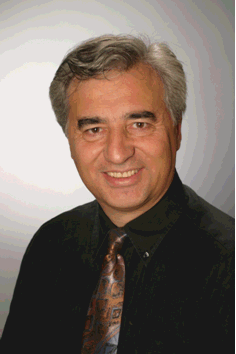 Paolo Maria Matricardi. Born in Rome in 1958. Graduated in Rome (1982), trained in Allergology and Clinical Immunology (1986) and Lab Medicine (1990). He worked at Allergy and Immunology Research Center (IAF, Rome), Biochemistry Institute UNIL (Lausanne, CH), World Health Organization (Geneva, CH) and currently in the Dept. of Paediatric Pneumology and Immunology at the Charité Medical School (Berlin, D). Major current research interests: hygiene hypothesis, evolution and clinical impact of IgE responses in childhood, prediction and prevention of allergy in childhood.
|
|
|
|
|
|
|
Abstract |
|
|
|
|
|
|
|
|
The Hygiene Hypothesis: From Epidemiology to Public Health Implications
In populations progressively acquiring a "westernized" lifestyle, the incidence of infectious diseases declines while that of allergic and autoimmune diseases increases. Many epidemiological studies suggest that the first phenomenon is contributing to the second one (hygiene hypothesis). A major role in the "natural" prevention of allergic diseases is probably played by foodborne and faecal-oral infections. On the basis of current epidemiological knowledge, it can be predicted that "mega-countries" undergoing epidemiological transition will have to face a sort of "epidemic" of allergic and autoimmune diseases in the years to come. Public Health Systems of these countries may be prepared in advance to this event and may avoid the mistakes done by countries whose epidemiological transition has occurred during the 20th century. |
|
|
|
|