| MATTA, Chérif |
 print this page print this page |
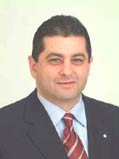
Dr. Chérif Matta is a Post-Doctoral Research Fellow and a Chemistry Teaching Fellow at the University of Toronto, Canada. He holds a BSc of Pharmaceutical Sciences from Alexandria University and a Graduate Diploma in Health Management from the Sadat Academy (Egypt). He earned his PhD in 2002 in quantum, bio-theoretical and computational chemistry from McMaster University (Canada) with the world-renowned theorist Richard F. W. Bader. He has since been a PDF in the group of Nobel laureate John C. Polanyi at the University of Toronto. He has recently been awarded the prestigious Izaak Walton Killam Postdoctoral Fellowship tenable at Dalhousie University (Canada). Dr. Matta is a “full member” of the Chemical Institute of Canada and a member of the Canadian Society of Chemistry, the American Chemical Society (ACS), and the Protein Society. Dr. Matta has published more than 20 papers in high impact journals and has been featured five times as the cover theme. He developed two software distributed by the University of Indiana's Quantum Chemistry Program Exchange. During 2003, he has been an invited speaker, guest lecturer, and panelist 15 times in five countries. He serves as a referee for the Leverhulme Trust (UK) and for journals including: Organic Letters; Journal of Physical Chemistry A; Journal of Computational Chemistry; Journal of Computer-Aided Molecular Design. The research of Dr. Matta has been featured as the cover story of the ACS Chemical and Engineering News. The Faculty of 1000 Inc. has recently ranked his research as “EXCEPTIONAL: Top 1% of published biological literature”. His awards include a 2003 American Association for the Advancement of Science's BioVision “Bio-Leaders of Tomorrow” Fellowship, the 2003–2004 Chemistry Teaching Fellowship Competition Award, and the Gordon Research Conference-International Union of Crystallography Travel Award. He commands mother tongue fluency in Arabic, English and French.
Computational chemistry: A powerful and inexpensive tool for basic and applied research in the life sciences
With the advent of powerful computers and accurate ab initio electronic structure and density functional theory (DFT) methods, computational chemistry has become an established branch of modern chemistry. The 1998 Nobel Prize in Chemistry has been awarded to John Pople and Walter Kohn for their pioneering contributions to computational chemistry and DFT, respectively. In this talk, the significance of theoretical and computational chemistry to biological research will be illustrated. The talk will showcase some of the applications of computational chemistry in drug design, biophysical chemistry, and environmental chemistry. Some examples of the use of computational chemistry include: the prediction of drug action; the elucidation of the mechanisms of drug action; the study of the binding of a substrate to its receptor; the study of the energetics of enzyme-mediated biochemical reactions; the prediction and correlation of physicochemical properties of drugs with their electronic properties; establishing a link between the electronic properties of molecules such as the carcinogenic polycyclic aromatic hydrocarbons (PAH) with their carcinogenic potency; and the study of the effects of stray fields and other environmental pollutants on critical cellular molecules. The impact of such research on public health will be emphasized along with the particular suitability of computational chemistry as an academic activity for “the poor” (defined in this talk as those who cannot afford to bear the prohibitive costs of a typical modern biochemical research facility). For instance, a modern nuclear magnetic resonance (NMR) spectrometer may fetch up to $5 million. In sharp contrast, anyone equipped with a modest $3,000 PC (and a good brain!) can already perform state-of-the-art quantum chemical calculations and predict a host of properties for the molecule or system at hand. In view of its relatively low cost, computational and bio-theoretical chemistry are fields of research to which the developing world can, and should, contribute on an equal footing as the developed world. The establishment of schools of computational chemistry in the developing world should be seen within the wider context of achieving educational and academic reforms and the strive for excellence in these countries. The transfer of this technology between the two hemispheres is something that should be strongly encouraged and funded.