|
|
Biography |
|
|
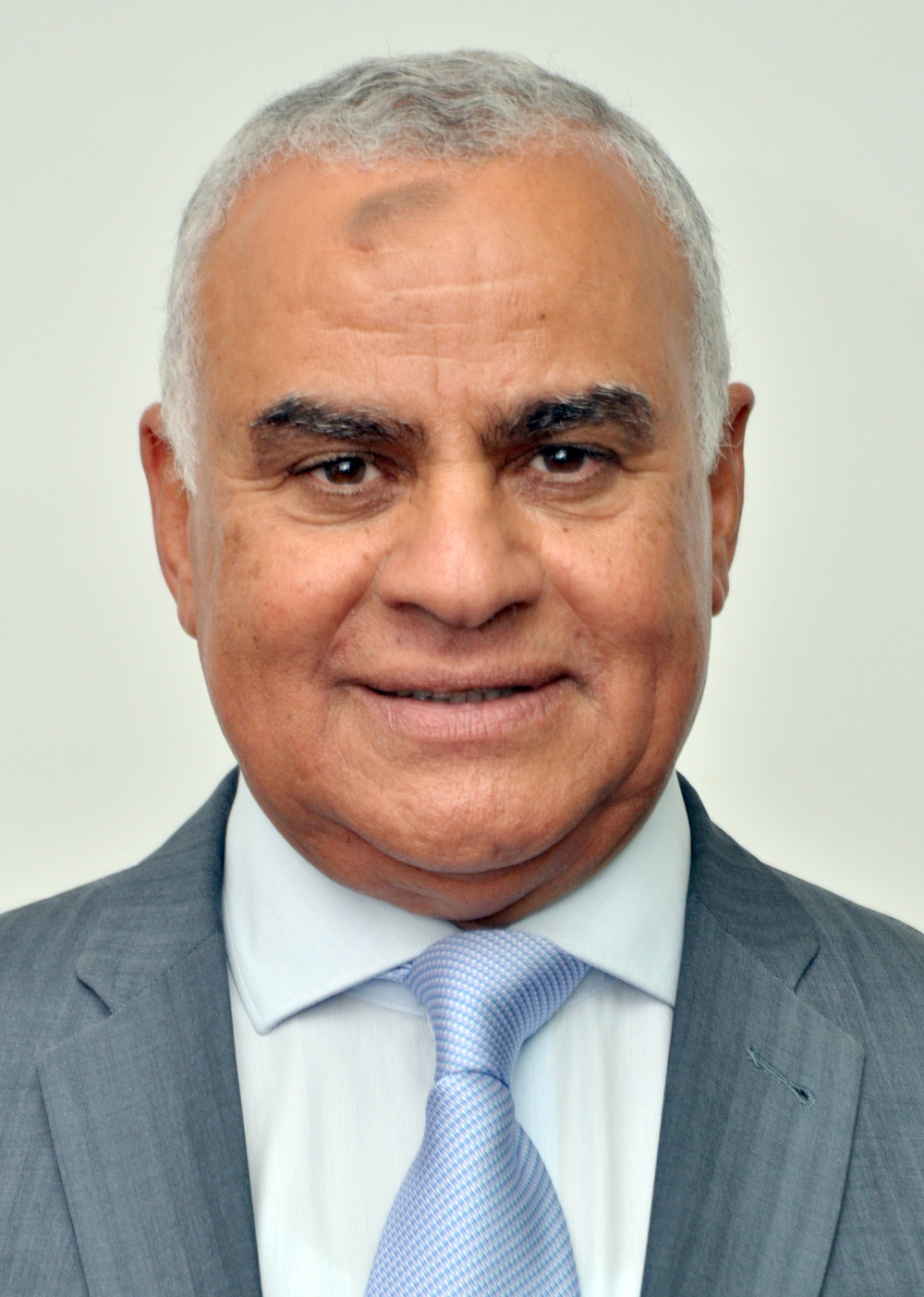 Prof. Mahmoud H. Abdel-Kader is a
Professor of Photochemistry and currently,the President of the German University in Cairo, since 2002. Prof. Abdel-Kader received his Ph.D. (Dr. rer. nat.) in Spectroscopy and Photochemistry at Stuttgart University, Germany in 1979, under the supervision of Prof. Dr. Theodor Foerster and Prof. Dr. H.E.A. Kramer. He got a post doctoral position at the Institute of Physical Chemistry, University of Karlsruhe, from
1982 to 1983. From 1983 to 1984, he was a Senior Researcher at the Federal Institute of Technology, EPFL, Lausanne, Switzerland. He was a Visiting Professor at both Georgia Institute of Technology, Atlanta, USA and the Institute for Laser Technology in Medicine and Metrology, Ulm University. He then served the position of Vice Dean of the National Institute of Laser-Enhanced Sciences (NILES), in Cairo University.
Prof. Abdel-Kader has supervised over 80 master’s theses and doctoral dissertations. He has published over 100 publications in peer reviewed journals and in conference proceedings. Also, he is an inventor of 8 patents. He has given more than 80 invited talks and plenary lectures at both national and international
meetings.
Prof. Abdel-Kader’s research interests include: Laser Spectroscopy to study the Kinetics and mechanism of Ultrafast Chemical Reaction (Photochemical
Isomerization, Protolytic Reactions and Electron Transfer Processes), Utilization of Solar Energy in Photochemical Conversions for Malaria, Filaria and Dengue Fever
Vector control, Parasites such as Schistosomiasis and Agricultural pests using environmentally friendly (natural extract) Photosensitizers and Application of
Nanoparticles in Photodynamic Diagnosis and Therapy of Cancer.
Prof. Abdel-Kader was elected as Officer, then Chair of the European Society for Photobiology (ESP) outside Europe (1997–2001). He was awarded the distinguished
State Prize in Chemistry, in Egypt, 1996 as well as the State Medal in
Chemistry, 1998. Recently, Prof. Abdel-Kader was awarded the 2012 Excellence Award of Science from Cairo University.
Prof. Mahmoud H. Abdel-Kader is a
Professor of Photochemistry and currently,the President of the German University in Cairo, since 2002. Prof. Abdel-Kader received his Ph.D. (Dr. rer. nat.) in Spectroscopy and Photochemistry at Stuttgart University, Germany in 1979, under the supervision of Prof. Dr. Theodor Foerster and Prof. Dr. H.E.A. Kramer. He got a post doctoral position at the Institute of Physical Chemistry, University of Karlsruhe, from
1982 to 1983. From 1983 to 1984, he was a Senior Researcher at the Federal Institute of Technology, EPFL, Lausanne, Switzerland. He was a Visiting Professor at both Georgia Institute of Technology, Atlanta, USA and the Institute for Laser Technology in Medicine and Metrology, Ulm University. He then served the position of Vice Dean of the National Institute of Laser-Enhanced Sciences (NILES), in Cairo University.
Prof. Abdel-Kader has supervised over 80 master’s theses and doctoral dissertations. He has published over 100 publications in peer reviewed journals and in conference proceedings. Also, he is an inventor of 8 patents. He has given more than 80 invited talks and plenary lectures at both national and international
meetings.
Prof. Abdel-Kader’s research interests include: Laser Spectroscopy to study the Kinetics and mechanism of Ultrafast Chemical Reaction (Photochemical
Isomerization, Protolytic Reactions and Electron Transfer Processes), Utilization of Solar Energy in Photochemical Conversions for Malaria, Filaria and Dengue Fever
Vector control, Parasites such as Schistosomiasis and Agricultural pests using environmentally friendly (natural extract) Photosensitizers and Application of
Nanoparticles in Photodynamic Diagnosis and Therapy of Cancer.
Prof. Abdel-Kader was elected as Officer, then Chair of the European Society for Photobiology (ESP) outside Europe (1997–2001). He was awarded the distinguished
State Prize in Chemistry, in Egypt, 1996 as well as the State Medal in
Chemistry, 1998. Recently, Prof. Abdel-Kader was awarded the 2012 Excellence Award of Science from Cairo University.
|
|
|
|
|
|
|
Abstract |
|
|
|
|
Photodynamic Control of Malaria Vector and Noxious Insects in Infested African Swamps |
|
|
|
|
|
In this work we present the successful field implementation of using Photodynamic modality utilizing natural extracts of chlorophyll derivatives and sunlight to control Malaria, Schistosomiasis and agricultural pests in infested epidemic swamps in Uganda, Ethiopia and Sudan. Both Malaria and Schistosomiasis (bilharazias) are parasitic diseases and are considered as life threatening. Yearly more than 350 million people are infected and more than one million die due to Malaria complications. For Schistosomiasis, 230 million are infected worldwide.
This technique is based on the accumulation of chlorophyll derivatives in the insect or parasite body which induce photo-oxidative stress upon exposure to sunlight, thereby producing cytotoxic singlet oxygen species that leads to death of the organism. Confocal laser scanning microscopy measurements are used to monitor the concentration and the dynamic distribution of chlorophyll derivatives inside the organism's body.
Results revealed that from 85% to 100% mortality of larvae population were obtained at different concentrations of chlorophyll derivatives (0-100 µm). Other biological beneficiary organisms which were present in the same treated swamps, were not affected (target selectivity).
Therefore, it is a target-selective formula for each type of the agricultural noxious insects and parasites, and has no effect on the other beneficial organisms in the same breeding site. This novel method combines effectiveness, high selectivity and highest levels of human safety and environmental friendliness.
|
|
|
|
|