Text Box:

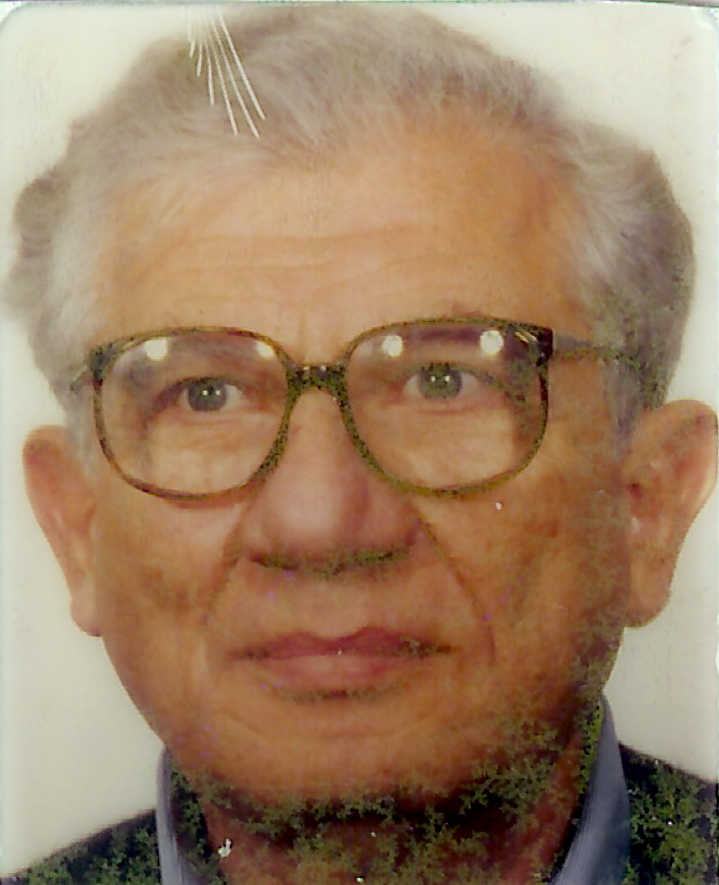
Gazale, Midhat

Senior Science and Technology Advisor

1985–93: President, AT&T–France

Vice-President, AT&T–Europe

1983–85: Chairman of the Board and CEO, SPERRY–France

Vice-President, SPERRY Corp. (USA)

1979–83: Chairman of the Board and CEO, ICL–France

Vice-President, International Computers Ltd. (United Kingdom)

1975–79: President, INFOREX–France

Vice-President, INFOREX Corp (USA)

1966–75: Director of Corporate Strategy, CII–BULL (France)

1956–66: IBM

Research Scientist (USA)

Manager of Product Marketing for the Asia-Pacific (Japan)

Education

Science Doctorate, Paris University (1959)

Diplôme d’Ingénieur de l’Ecole Supérieure d’Electricité (1953)

Bachelor of Electrical Engineering, Cairo University (1951, Distinguished)

Others

Chevalier (Knight) of the French Ordre National du Mérite Serves on the Board of Several Foundations, including Hospital Foch, l’Université Française du Caire, les Musées d’Egypte, etc.

Professor of Management at Paris University (Dauphine)

Author of Mathematics books at Princeton University Press

Recipient of the Honorable Mention of the Association of American Publishers

Author of several patents and scientific publications

Born in Alexandria on 21 July 1929, Dr. Midhat. J. Gazale is an Egyptian citizen presently residing in Paris, France


SCIENCE AND TECHNOLOGY LITERACY

In the industrialized countries, Science and Technology are the essential tools that nations have used, and continue to use at an even faster pace, to improve their economic conditions and social well-being.

A number of developing countries have attempted to follow their example, by establishing policies aimed at fostering Science and Technology, in the hope of bringing about similar improvements in their countries.

While these efforts have led to some spectacular and unexpected successes in East Asia, many developing nations still struggle to achieve some measure of success.

Developing countries, among them Egypt, have initiated several programs aiming at industrialization. They have promoted technological education, and to a lesser degree emphasized Research and Development.

This has not always led to a measure of success commensurate with expectations.

Despite substantial foreign aid programs, shortage of funds may only partly explain the shortfall in expectations, which must also be attributed to the weakness of scientific foundations. A chief obstacle has been, and still is, that scientific culture has not permeated the minds of our citizens.

That is most visible in the very science-intensive industries such as computers and telecommunications, biotechnologies, materials, etc. Computers and Tele-communications, for example, rely on the development of new semi-conductors, memory technologies, photonics, as well as the elaborate algorithms that are required by techniques such as signal processing, etc. These technologies, in turn, rely heavily on mathematics.

Unfortunately, despite all the recent efforts, the average Egyptian citizen has a limited understanding of what Science and Technology can bring him and his nation. While he may be only weakly computer-literate, he is generally Science and Technology-illiterate.

Two essential problems have to be addressed in parallel:

·        Substantially raising the level of Mathematics and Technology graduates and educators.

·        Raising of Science awareness at the most elementary education level, and amplifying it over the years, from primary schools all the way to graduate and post-graduate universities.