![]() |
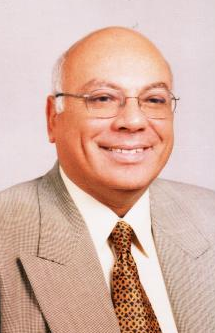
Khalil, Salah EldinProfessor M. Salah Eldin Khalil received the BSc (with honors) University of Alexandria, Egypt, 1966, Master of Technical Sciences, (with honors), 1972, USSR, MSc, and PhD, degrees in Electrical Engineering from Faculty of Engineering, University of Alexandria, Egypt, in 1973 and 1978 respectively. Professor Khalil held different teaching and research positions in the Egyptian Naval College (1972–87), Technical University of Denmark (1987–89), the Danish Electrical Research Institute [DELRI] (1990–92) and College of Engineering, Sultan Qaboos University (1992–2000). Currently, he is a Professor and Vice-Dean at the Alexandria Institute of Technology, Alexandria, Egypt. Professor Khalil has focused his research during the past 20 years on developing new insulating material for HVDC cables with polymeric insulation using additives. Professor Khalil was invited by different academic and industrial institutes in Egypt, Sultanate of Oman and USA to give seminars on his research work. In 1983, he was a visiting academic research associate in the Department of Electrical Power Engineering, Technical University of Denmark. In 1989, he received the Danish Technical and Scientific Research Council (STVF) research grant for research in Voltage DC cables with polymeric materials in Denmark. In 1998, Professor Khalil received the DAAD award for research in German Universities. Professor Khalil has participated in more than 20 national, regional and international conferences on dielectrics and education. He has presented and published over 50 papers on his research on dielectrics as well as on curriculum development and vocational education in various national, regional and international conferences, symposia and international professional journals. He is a senior member of IEEE. His present Research interests are: engineering education, high voltage dc-cables with polymeric insulation, effects of high voltage on health and environment. |
THE ROLE OF INDUSTRIALIZED NATIONS IN IMPROVING SCIENCE AND MATHEMATICS EDUCATION IN LESS DEVELOPED COUNTRIES
In an era of rapid technological advances, the importance of education is well recognized by individuals, communities, national governments and by the international community at large both in the industrialized countries and in less developed countries.
Science and mathematics are prime constituents of modern education and play a major role in shaping human civilization. In this context, there is a globally shared opinion that science and mathematics education requires a new approach to respond to the new challenges imposed by the latest transformations in the world.
This paper is primarily, but not exclusively, concerned with the role of industrialized countries in improving science and mathematics education in less developed countries.
Two important constraints were in mind while preparing the present paper.
First, the diversification of a subject relevant to education. Education is influenced by a multitude of factors: social, economic, political, cultural and historical. Such factors are usually joined to produce a unique specific national pattern reflected in every country. The range of theoretical and practical issues relevant to such a topic are many and varied.
Second, the world today has undergone immense transformations, almost in every aspect, education, science, technology, economy, culture, values, security and world order. The influence of contemporary changes of the new millennium, recent global developments, persisting imbalances, changing conditions on education and challenges facing it should be considered.
This paper takes a pre-Copernican view of education as a center of a constellation round which other issues revolve. The factors that are shaping the development of higher education today, with emphasis on globalization, are highlighted.
Education issues in both industrialized and less developed countries are outlined and compared.
Experience and efforts of some industrialized nations in improving the education of mathematics and science with emphasis on engineering mathematics education are examined and discussed.
From the standpoint of an educator with particular concern to the development of higher education and with a personal conviction that the success of a development plan in a certain country is strongly correlated with its connection to the “national character” and the adopted system of education, an attempt is made to identify new strategies to improve the education of science and mathematics in less developed countries with the help of the industrialized countries and their experience.