Text Box:

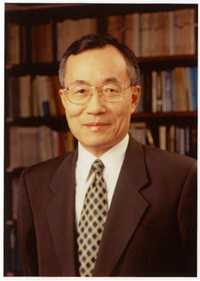
Kwak, Byong-Sun

Dr. Kwak, Byong-Sun, Invited Professor of Gyeongin National University of Education, Incheon, Korea, has served as the former President of the Korean Educational Development Institute (KEDI)—1998–2002. Dr. Kwak received his PhD in Education at Marquette University and is recognized, in Korea, as a prominent specialist in curriculum issues and reform policy, including curriculum development and evaluation, citizenship education, critical thinking, educational technology and educational reform policy. He is currently member of several government committees including Presidential Commission for Education and Manpower Policy of Korea. He served as a consultant of the World Bank as well as UNESCO for educational reform of several Asian and African countries. Dr. Kwak is currently succeeding the Chair of Pacific Circle Consortium, associate organization of OCED in the education field and engaging in worldwide academic journals as international editorial board member such as Studies in Educational Evaluation and Asia-Pacific Journal of Teacher Education and Development.


KOREA’S EXPERIENCE IN MATHEMATICS AND SCIENCE EDUCATION

Korean students show steadily high rank in series of international comparative studies on mathematics and science achievement tests conducted by IEA and PISA. Some foreign observers are curious about Korean students high achievements in both mathematics and science with the fact that the two modern subjects are not indigenous in Korean culture. How Korean students have made notable achievements in modern mathematics and science learning?

Since Korea has undergone a series of hardships by the invasion of foreign industrial nations late 19th century, Korean people acknowledged the power of industrialized machines, which were evolved through continuous scientific revolution. Right after the national independence in 1948, Korean education has sought basically two directions, one is for national identity, and the other is for modernization. In this sense, mathematics and science education have been stressed as the fundamental subjects for the development of a rational mind. Here are some measures that show how Korea has tried to boost mathematics and science education.

  1. First, mathematics and science have been stressed in school curriculum. Mathematics and science are taught from the first grade of primary school. The proportion of mathematics and science from grade 1 to 10 is roughly 22% in terms of time allocation for instructional hours in the curriculum. Mathematics follows Korean language as the subject of second largest instructional hours in primary school. Time allocation for science is compatible with social studies in primary and secondary school.
  2. Second, mathematics has been mandatory for the entrance examination of higher education. Mostly, Korean language, mathematics, and English have been the core subjects for high stake examination. It is generally recognized that high achievers in mathematics are bright students.
  3. Third, science high schools were established for capable students to develop their careers in the field of science and technology. 3,600 students are enrolled at 16-science high schools nationwide.
  4. Fourth, government established many national institutes in science and technology field to strengthen the R/D capability of the nation. Over 6,100 full-time researchers are involved in science and technology fields at 27 Government-funded institutes.
  5. Fifth, government developed many incentive programs for science students and scientists to support new researches and technology development, BK 21, IT strategy.
  6. Sixth, private sector plays a greater role to build up scientific culture.
  7. Seventh, pre- and in-service teacher/training has been continuously offered to upgrade teaching profession.