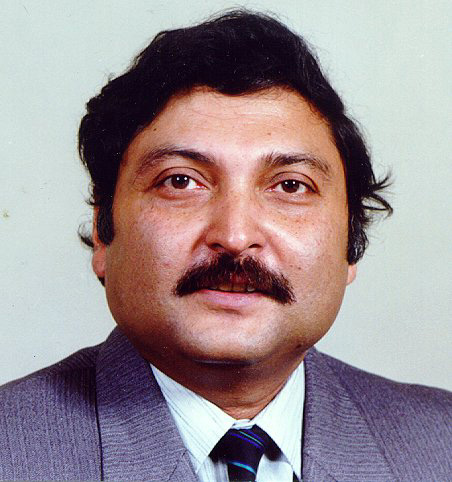
Mitra, Sugata
Dr. Mitra works in the areas of Cognitive Science, Information Science and Educational Technology. He has been working on these areas as well as on physics and energy for more than 20 years.
His contributions include a number of inventions and first time applications. Among other applications, he is credited with having started the database publishing industry (particularly the Yellow Page industry) in Bangladesh and India, as well as having implemented the first applications of digital multimedia and Internet based education in India. His experiments (often referred to as “The Hole in the Wall” experiments) with children and the Internet have been reported worldwide since 1999.
He has many research publications and also writes extensively for adults and children.
Dr. Mitra has taught and researched at the Indian Institute of Technology, Delhi, HCL Limited, the Technical University of Vienna, Austria and United India Periodicals. He has worked with NIIT Ltd. in its formative years and has created the organization’s instructional development and R&D laboratories. He is currently Chief Scientist with NIIT.
Dr. Mitra is an advisor to a number of Government and other organizations in India, the USA and Australia. He was Vice-President of the All India Association for Educational Technology, and is a member of the New York Academy of Sciences (USA), the Planetary Society (USA), the Institution of Electrical and Electronics Engineers (IEEE, USA) and the Press Club of India.
He was born in Calcutta on 12 February 1952 and holds a PhD in Solid State Physics from the Indian Institute of Technology. He lives and works in New Delhi, where his current interests include Children’s Education, Cyberspace, Remote Presence, Self-organizing Systems, Cognitive Systems, Physics and Consciousness.