![]() |
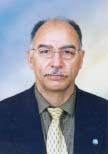
Soliman, Salah Ahmed Profession and activities Professor of Pesticide Chemistry and Toxicology, Faculty of Agriculture, Alexandria University, 1986–present. Visiting Scientist, US Environmental Protection Agency, Research Triangle Park, North Carolina, USA, 1979–1982. Visiting Professor, University of Texas Medical Branch (UTMB), Galveston, Texas, USA, 1987–1988. Visiting Professor, King Saud University, Saudi Arabia, 1988–1994. Member, Final Review Boards (FRBs), International Program on Chemical Safety (IPCS), World Health Organization (WHO) since 1992. Member, Joint Meeting on Pesticide Residues, WHO/FAO JMPR, since 1999. Vice-Chairman, Steering Group on Risk Assessment (SGRA/IPCS, WHO), 1999–2003. More than 25 students obtained their MSc and/or PhD degrees under his supervision at Alexandria and other Universities. Has more than 70 scientific papers in areas of neurotoxicity, pesticides and heavy metals monitoring and mode of actions published mostly in international journals. Wrote several chapters in international books. Constructed a number of Research Laboratories at the Department of Pesticide Chemistry and Toxicology, Alexandria University through research projects funded by USEPA and other US and UN organizations. Member, US Society of Toxicology; Society of Environmental Chemistry and Toxicology; Weed Science Society of America; and Egyptian Society of Toxicology. Awarded the National Award on Agricultural Sciences (1980) and offered the First Level Medallion of Science and Art by Decree of the President of Egypt (1981). |
IMPORTANCE OF EVALUATING STUDENT KNOWLEDGE AND SKILLS
There are some major questions that need to be asked by parents, students, the public and those who run the education systems:
· How well are our young graduates prepared to meet the challenges of the future?
· Are they able to assess, reason and communicate their ideas effectively?
· Do they have the capacity to continue learning throughout life?
We should have systems to monitor student learning to provide some answers to these questions and to use comparative international analysis to extend and enrich the national picture by providing a larger context within which to interpret national results. This comparative analysis can provide direction for school instructional efforts and for students learning as well as insights into curriculum strengths and weaknesses.
Coupled with appropriate incentives, results of such analysis can motivate students to learn better, teacher to teach better and schools to be more effective. It will also provide tools to allow central authorities to monitor achievement levels even when administration is devolved and schools are run in partnership with communities, a trend being enhanced by the Government.
Such analysis can provide a better understanding of the causes and consequences of observed skill gaps. It will assist authorities in seeking to bring about improvements in schooling and better preparation for young people as they enter an adult life of rapid change and deepening global interdependence.
The aim of this presentation is to introduce and throw some light on a very successful international education–evaluating program operated by the Organization for Economic Cooperation and Development (OECD), the Program for International Student Assessment (PISA).
PISA is a new, regular survey (15-year-old), which assesses aspects of their preparedness for adult life.
In this presentation I will explain the conceptual framework on which the PISA assessment is based in terns of the content that students need to acquire, the processes that need to be performed, and the contexts in which knowledge and skills are applied. It will also illustrate how the assessment is to be performed by reproducing sample assessment items and explaining what each is measuring.