|
1
|
- G.M. Abd Al-Kader
- Mathematics
Department Faculty of Science
- Al-Azhar University,
- Nasr City 11884, Cairo, Egypt.
|
|
2
|
- The general classes of some quantum states are considered. Much attention is given for the squeezed
displaced Fock states (SDFS's).
The superpositions of these quantum states are reviewed. The non-classical properties of these states such as
photon number distribution and
squeezing are discussed.
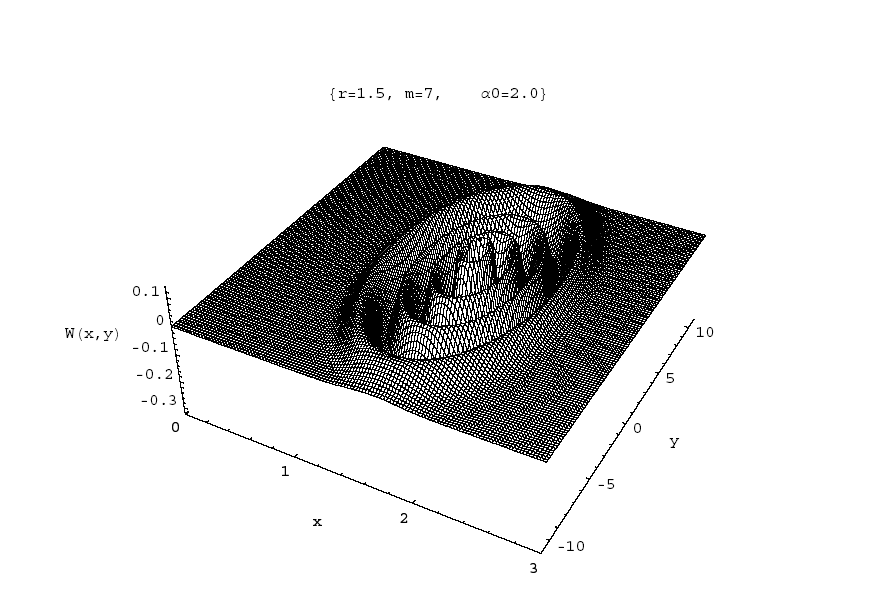
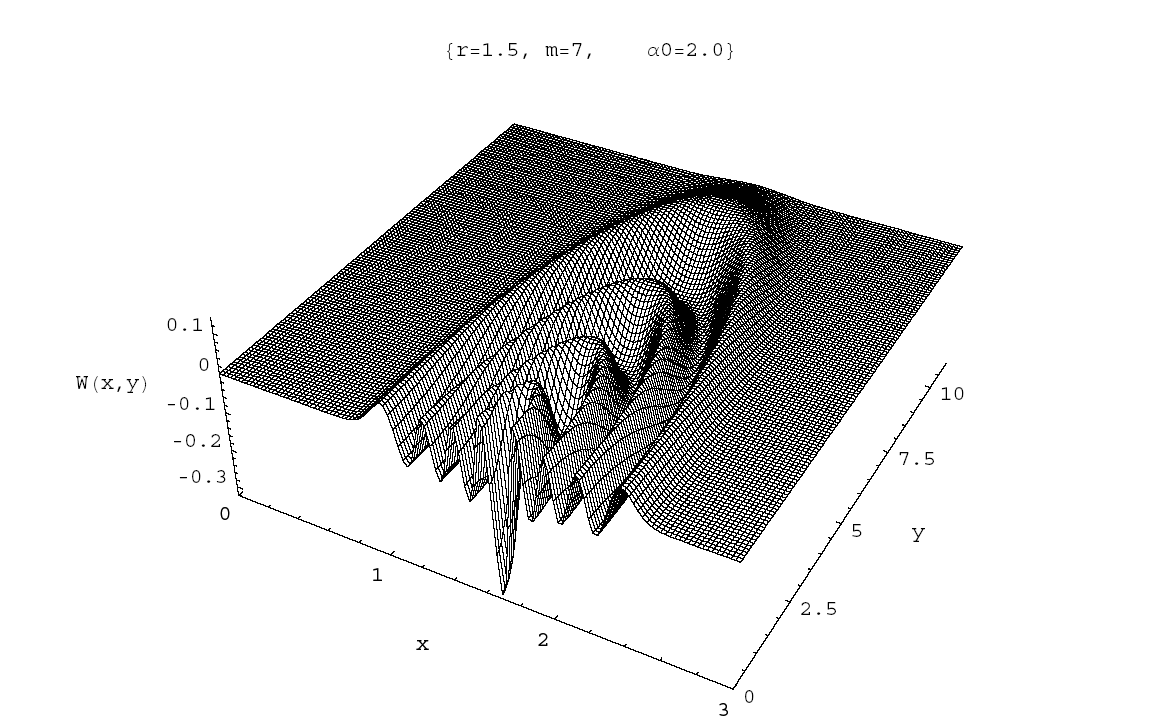
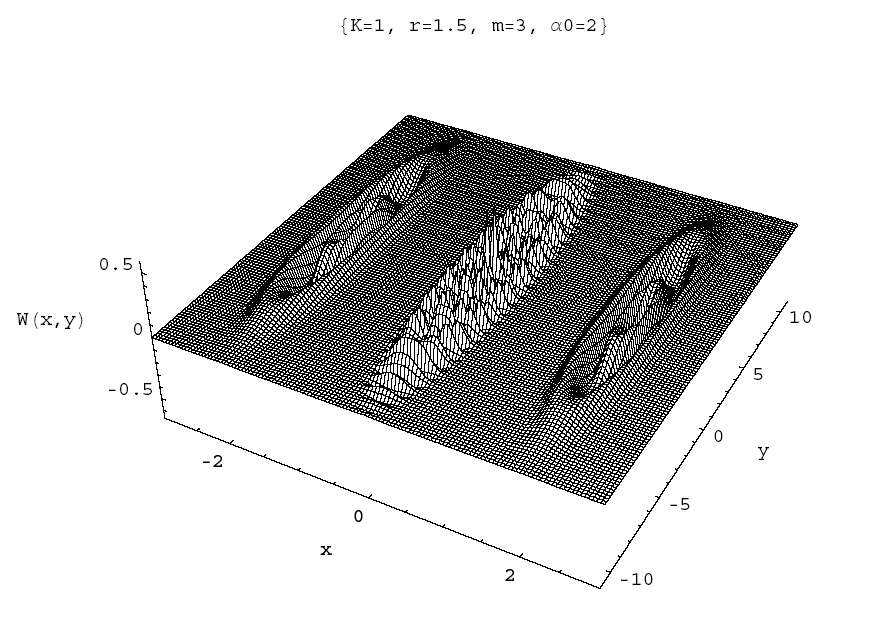
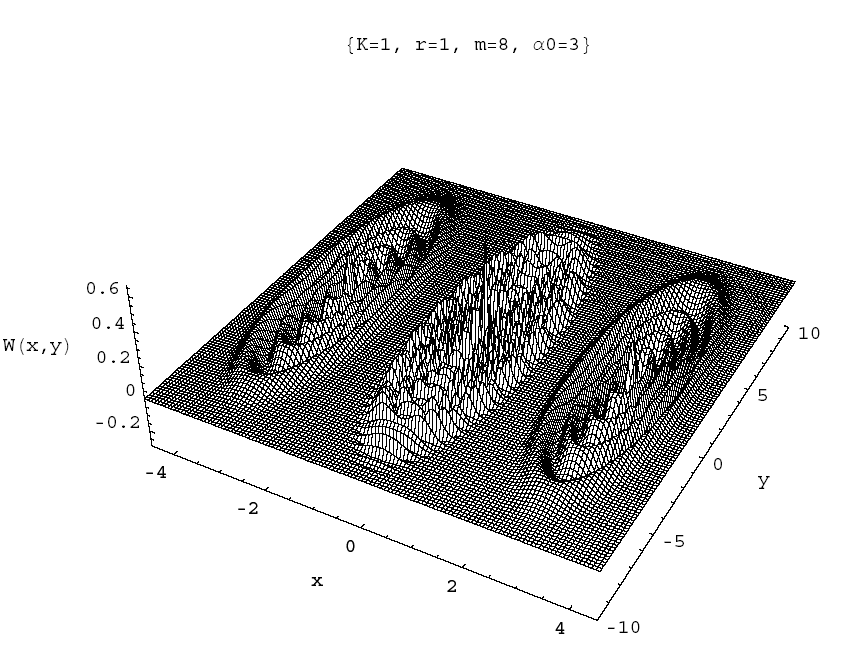
The s-ordered distribution functions of the SDFS's are investigated. Analytical and numerical results for
the quadrature component
distributions for the superposition of a pair of SDFS's are
presented. The Pegg-Barnett (PB)
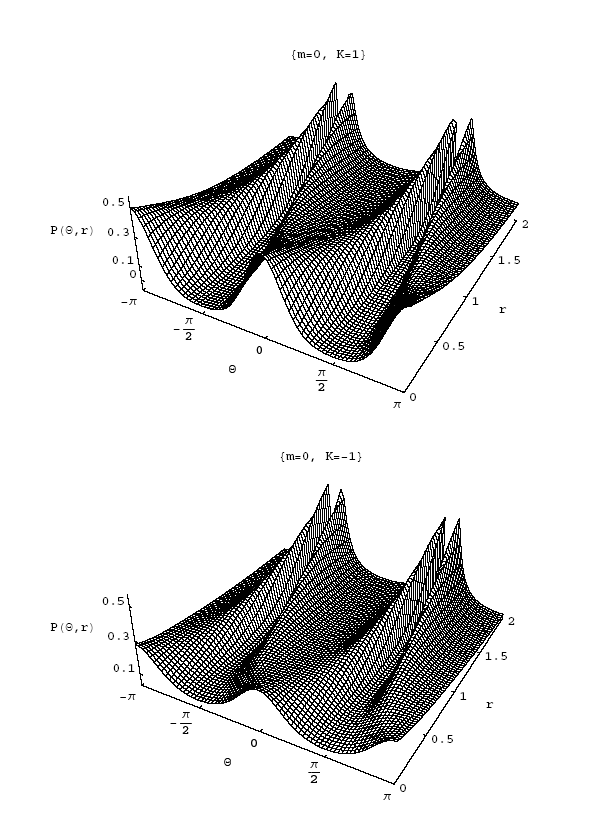
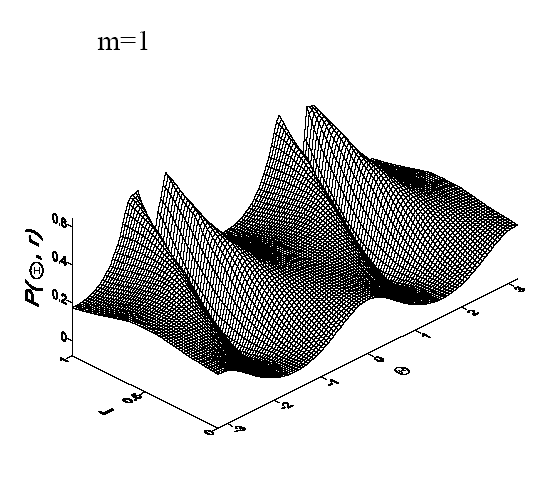
phase distribution is given and compared with the radial integration of the
s-parameterized distribution function over the phase space variable of SDFS's.
|
|
3
|
- The idea of light quanta was motivated by Max Planck's published law of
black-body radiation ("On the Law of Distribution of Energy in the
Normal Spectrum". Annalen der Physik 4 (1901)) by assuming that
Hertzian oscillators could only exist at energies E proportional to the
frequency f of the oscillator by E = hf, where h is Planck's constant.
|
|
4
|
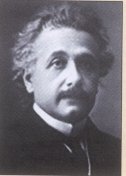
- Albert Einstein's mathematical description in 1905 of how it was caused
by absorption of what were later called photons, or quanta of light, in
the interaction of light with the electrons in the substance, was
contained in the paper named "On a Heuristic Viewpoint Concerning the Production and
Transformation of Light". This paper proposed the simple
description of "light quanta" (later called
"photons") and showed how they could be used to explain such
phenomena as the photoelectric effect.
|
|
5
|
- The simple explanation by Einstein in terms of absorption of single
quanta of light explained the features of the phenomenon and helped
explain the characteristic frequency. Einstein's explanation of the
photoelectric effect won him the Nobel Prize of 1921.
- The concept of the photon in the quantum theory of a radiation field has
been built on the number (Fock) state |n> The number states are
eigenstates of the field Hamiltonian of the harmonic oscillator and
exhibit no phase information.
|
|
6
|
- The coherent state, which is a linear superpositions of all |n>
states with coefficients chosen such that the photon number distribution
is Poissonian, has been extensively studied.
|
|
7
|
- In addition to coherent states, squeezed states are becoming
increasingly important. Eversince their
initiation, squeezed states of the radiation field have received
considerable attention, and afford a precision in measurements that
transcends the limit that was previously held to exist. The squeezed
state is one of the non-classical states of the electromagnetic field in
which certain observables exhibit fluctuations less than in the vacuum
state.
|
|
8
|
- Squeezed and displaced number states
have been studied from the viewpoint of the standard and
principal squeezing of vacuum fluctuations and of the photon statistics.
These states generalize two-photon coherent states, squeezed number
states, and displaced number states.
|
|
9
|
- Superposition of quantum-mechanical states of electromagnetic field have
recently received much attention in quantum optics, since these states
can exhibit non-classical properties of light, such as quadrature
squeezing and sub-Poissonian photon statistics. In particular, the Schrödinger cat states, are superpositions of distinguishable
macroscopic quantum states of a single mode of the quantized
electromagnetic field.
|
|
10
|
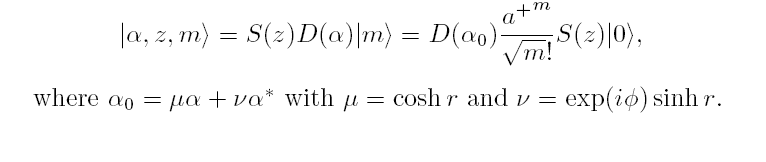
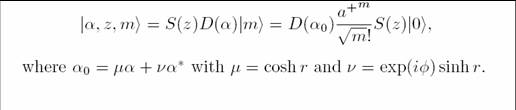
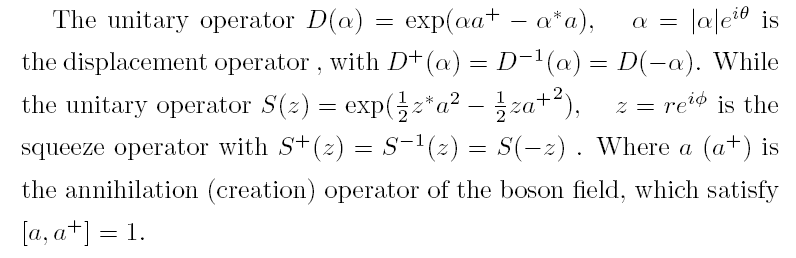
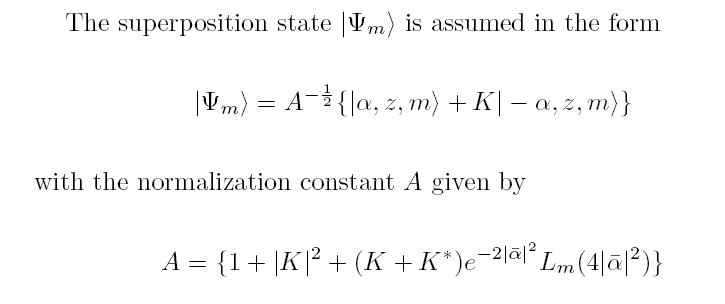
- The squeezed displaced Fock states
(SDFS) are defined by
|
|
11
|
|
|
12
|
|
|
13
|
|
|
14
|
|
|
15
|
|
|
16
|
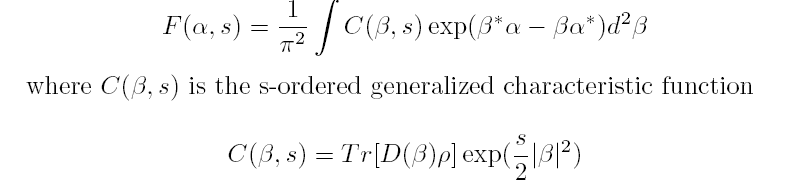
- We calculate the characteristic function (CF) of the SDFS. According to Cahill and
Glauber [27] the P ( Glauber-Sudarshan), W ( Wigner ) and Q (Husimi ) functions may be expressed in an integral form
|
|
17
|
|
|
18
|
|
|
19
|
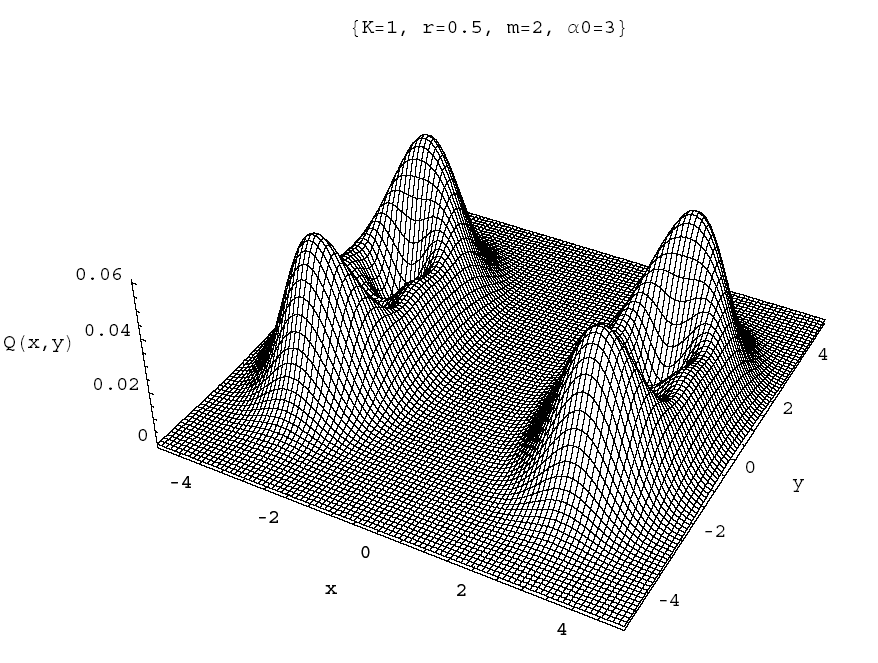
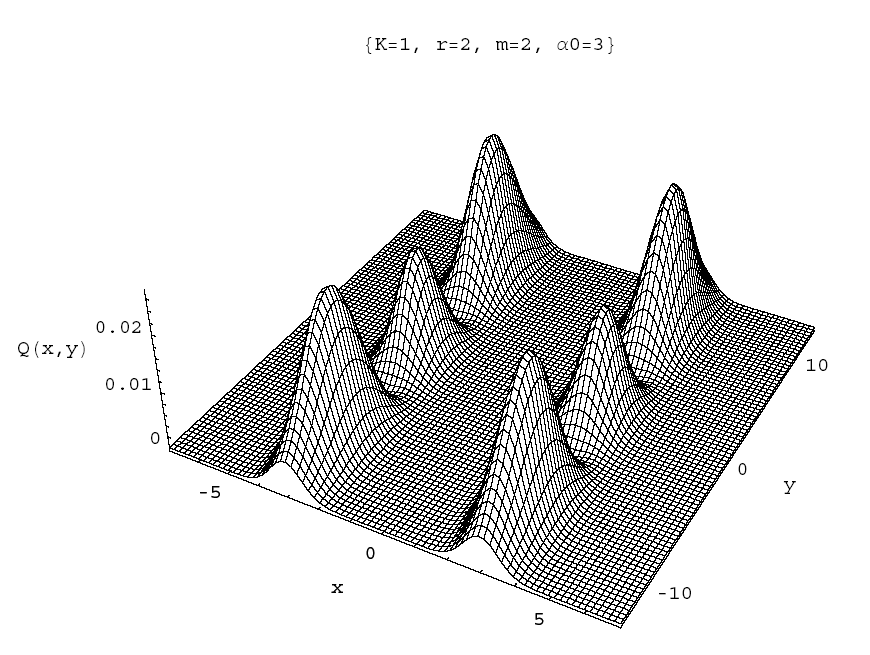
- and s is a parameter which defines the relevant quasiprobability
distribution function. For s=1 we obtain the Glauber-Sudarshan P
function, for s=0 we have the Wigner W-function, and for s=-1 , we get
the Q function.
- 4.1 s-parameterized QDF for the superposition of a pair of SDFS's
|
|
20
|
|
|
21
|
|
|
22
|
|
|
23
|
|
|
24
|
|
|
25
|
|
|
26
|
|
|
27
|
|
|
28
|
|
|
29
|
|
|
30
|
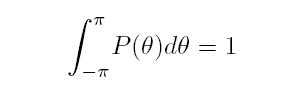
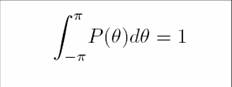
- 6.1 Pegg-Barnett phase distribution
- The Pegg-Barnett distribution is
normalized, such that
|
|
31
|
|
|
32
|
|
|
33
|
|
|
34
|
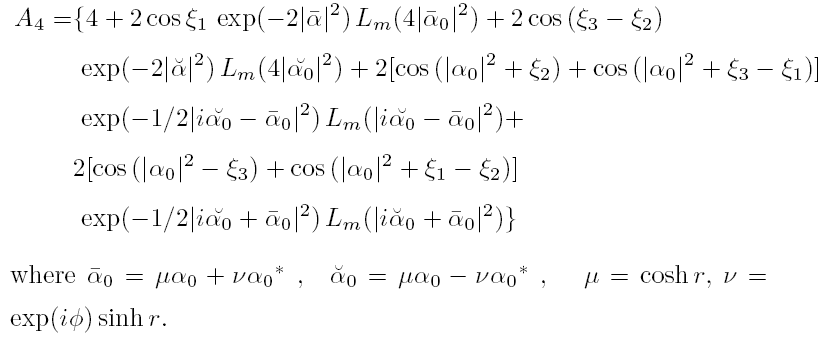
- We have discussed the definitions and properties of the SDFS's as a generalized system of " number,
coherent, squeezed coherent, squeezed number and displaced Fock " states.
The matrix elements and the inner product of two different SDFS's have
been considered. The so-called squeezed-state excitations have been
reviewed. The superposition of SDFS's are considered in two different
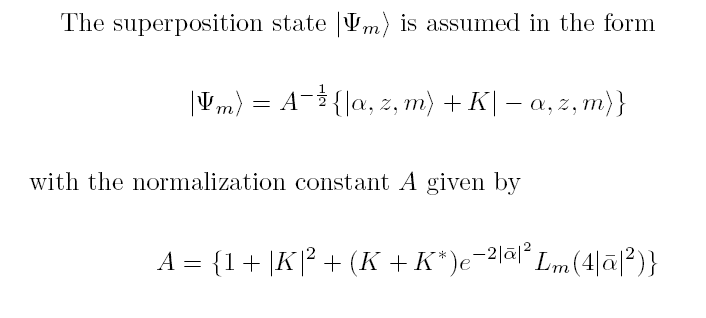
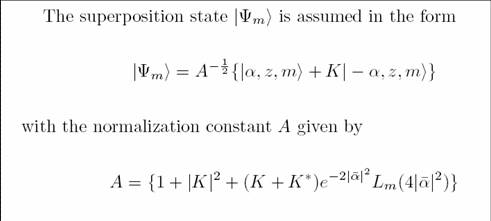
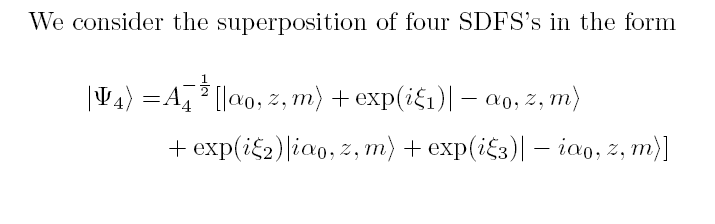
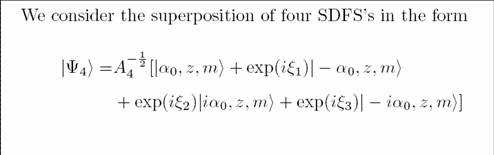
states, a pair of SDFS's and
four-component superposition. The
definitions and properties of
these states have been introduced.
|
|
35
|
- The R-representation for the density operator, which generalizes the
work of has been given. The squeezing properties for these
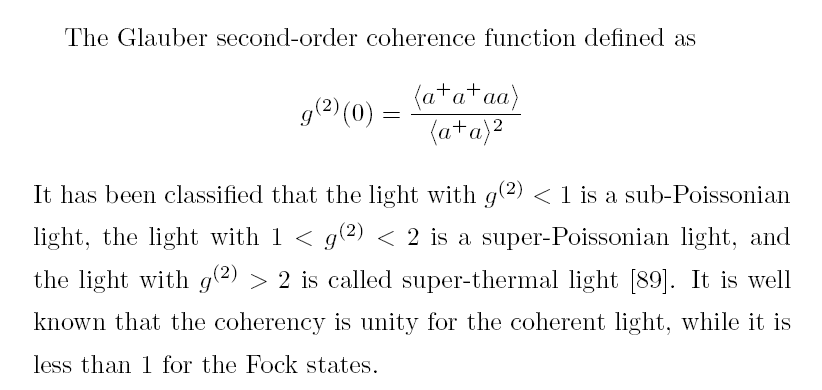
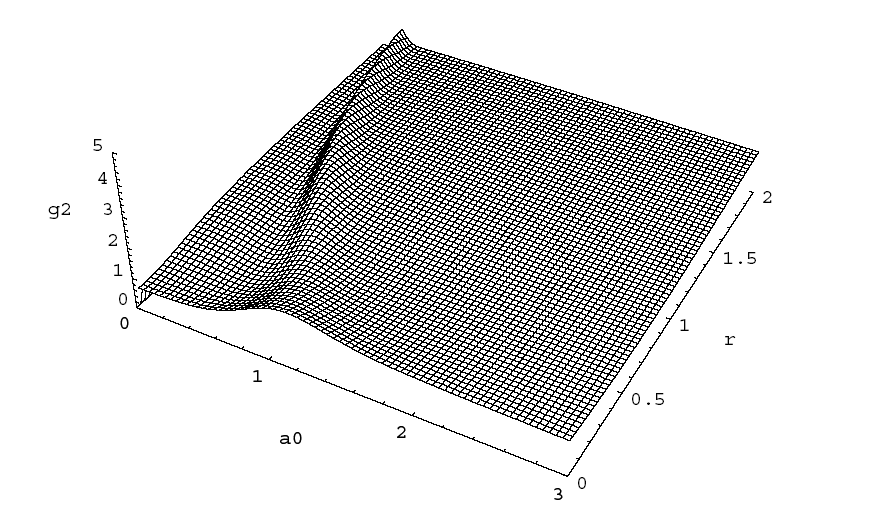
states have been discussed. The second-order correlation function have been investigated numerically.
We have analyzed the quadrature
component distributions for the SDFS's superposition state and have
presented analytical and numerical results. Several moments have been
calculated by using the
characteristic function.
|
|
36
|
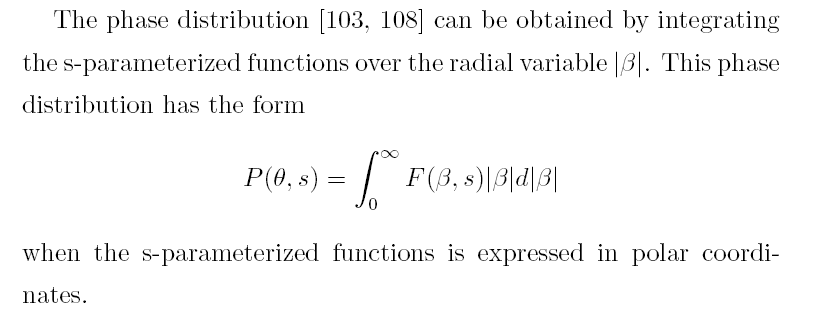
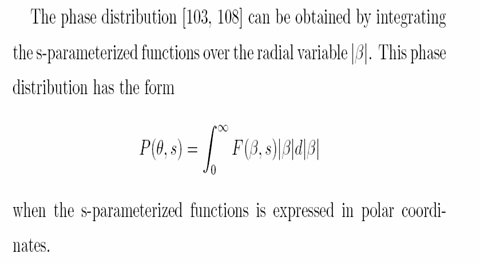
- We have obtained the phase
distribution by two different ways :one of them is by Pegg-Barnett
formalism, the second is by integration of the quasi-probability
function over the radial variable. We have studied the phase
properties of a superposition of pair and four SDFS's . The resulting phase
distributions are very useful and generalize results in the field of
"coherent, squeezed, displaced Fock" states.
|
|
37
|
|

 Notes
Notes