There are more than 70 million deaf people in the world; 80% of them live in developing countries, according to the World Federation of the Deaf. They are unable to express themselves using a spoken language; they resort to using other means of communication, which is sign language.
It is a manual means of communication used by deaf or hard of hearing individuals, often serving as their first language. It is composed of a set of gestures, facial expressions, body language, and hand shapes that are organized in a linguistic manner. Each gesture is a linguistic unit and is characterized by three distinct parts: hand shape, position, and movement.
Sign language is a fully developed language with its own vocabulary, structure, grammar, and syntax, as well as its own social beliefs, behaviors, arts, history, and values. Historians believe that it predates spoken languages, with references appearing in the works of Plato from the fifth century BCE. Moreover, the first book on teaching sign language was published in the 17th century and it has evolved over time.
Other People Use Sign Language
Sign language is not solely used by people with hearing impairments. Some families use simple signs to teach young children words before they can speak. It is also used by some monks who take a vow of silence and can be crucial for people with autism, speech impairments, cerebral palsy, or Down syndrome.
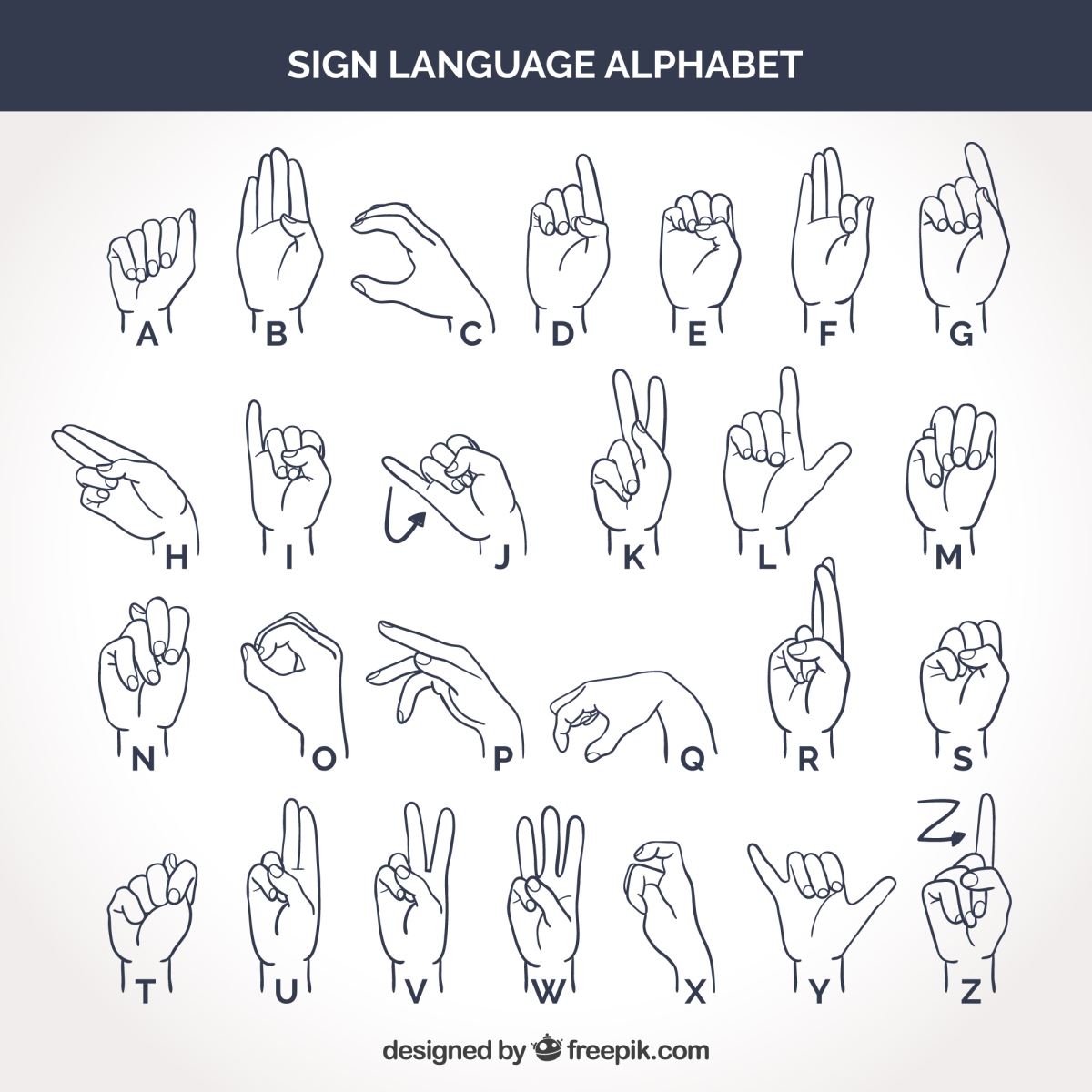
Is sign language universal?
Some people think that all countries in the world use the same sign language, but this is incorrect. There are about 300 sign languages worldwide; each has its own dialects or regional variations. Additionally, some sign languages, such as American and French sign languages, have one-handed signs; others, such as in Britain and Australia, use both hands. While there is no universal sign language, there is an international sign language used for global communication among the deaf community. It is regarded as a basic version of sign language, not as complex as a natural sign language, with more limited signs.
Other Types of Sign Language
- Finger-spelling: a method of manually spelling out words, letter by letter, using hand shapes, when not remembering the sign of a word in a sign language.
- Tactile Sign (Tracking Sign): a method used by Deaf-Blind individuals, where signs are traced onto their hands, not yours, to perceive the information.
International Day of Sign Languages
The United Nations General Assembly declared 23 September as International Day of Sign Languages; the day marks the foundation of the World Federation of the Deaf in 1951. It serves as an annual reminder to increase societal awareness of people with hearing impairments, promote their culture and language, and ensure their rights.
The significance of sign language lies in its ability to bridge a communication gap in the society. Sign language empowers people with hearing impairments, enabling them to fully participate in society and share their skills.
References
ai-media.tv
bbc.co.uk
internationaldays.org
makeitfable.com
ndcs.org.uk
sense.org.uk
washington.edu