I am a person who almost never naps. Partially because I value the “early to bed, early to rise” routine, and partially because I simply fail to fall asleep during the day, no matter how long I try. Most of the time, I am fine with that. Yet, it becomes difficult during Ramadan, as I wake up around three hours earlier than on normal days for suhoor and cannot get back to sleep. As a result, I have to endure through the long fasting hours on minimal rest.
The real challenge, however, came when my children were infants. I literally suffered sleep deprivation because I could not apply the golden rule of “nap when the baby naps” to make up for the sleepless nights. A few days ago, I learnt that breeding chinstrap penguins can accumulate up to eleven hours of sleep daily just through napping. ELEVEN HOURS! I am jealous!
In fact, unique sleeping behaviors are quite common across the animal kingdom. Let us take a brief explorative journey to trace some.
Micro-Sleep
In November 2023, a multinational team of French, Korean, and German researchers, published a study in Science magazine examining the napping behavior of chinstrap penguins during the breeding season. For these penguins, extended sleep could expose their eggs and chicks to the risks of predation and aggression from other animals.
To understand how these penguins get the needed rest, researchers implanted electrodes into the heads of 14 birds to measure brain activity. They found that they take up to 1000 “microsleeps” throughout the day, each lasting for only 4 seconds, accumulating up to 11 hours of sleep daily.
These seconds-long interruptions of wakefulness, marked by eye closure and sleep-related brain activity, allow them to gain the restorative functions of sleep while keeping constant watch over their precious offspring.
Unihemispheric Sleep
Sleeping can get even more complicated under the sea, especially for air-breathing mammals such as dolphins. For them, unconscious sleep means suffocating and drowning, since—unlike in humans—breathing is not an automatic reflex. So, they have to remain conscious and swim to the surface at intervals to breathe.
Dolphins and whales depend on unihemispheric slow-wave sleep (USWS), where only one half/hemisphere of the brain sleeps while the other remains awake to maintain enough awareness for breathing. Moreover, this sleep pattern literally allows the creature to sleep keeping one eye opened out for any potential threat.
Not only marine mammals depend on unihemispheric sleep, it is also very common among birds. Depending on how safe they feel, birds can either let their entire brain sleep or keep one hemisphere awake to stay alert and active. This allows them to get some rest during the prolonged migration flights that continues for days.
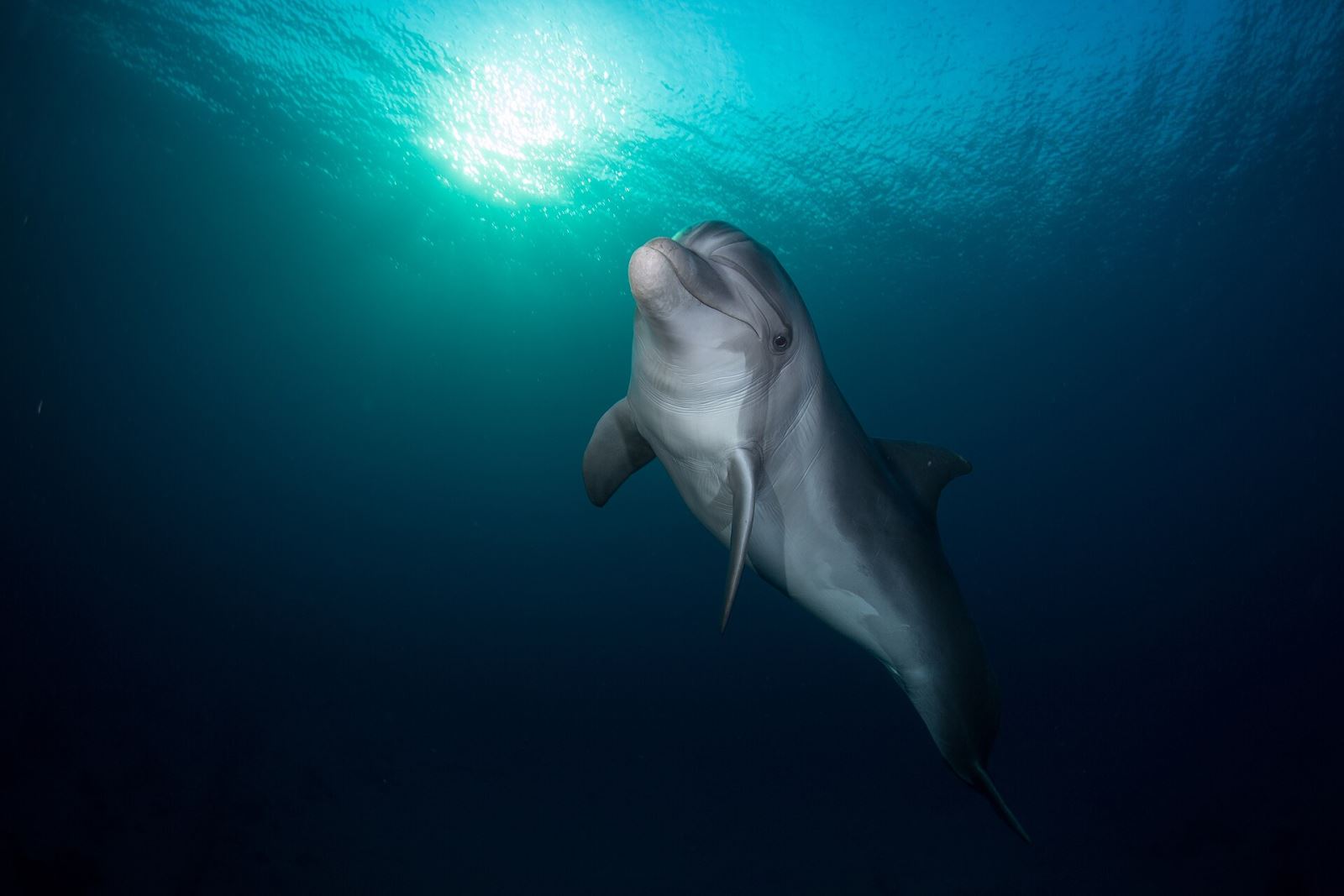
טל שמע, CC BY-SA 4.0, via Wikimedia Commons
Here I stand again, fascinated by the secrets of life on Earth. This is exactly how I imagine a superhuman would be like: a person equipped with the fascinating adaptation of creatures all around us. Someone who can fly like a bird, breathe underwater and swim like a fish, make their own food like a plant, and always have a way to make up for sleepless nights.
References
britannica.com
hardwickgazette.org
nationalgeographic.com
nature.com
science.org
uk.whales.org
Banner image: lwolfartist, CC BY 2.0, via Wikimedia Commons