|
|
Biography |
|
|
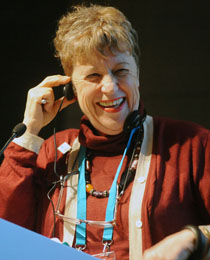 Operates at the Board level in support of improved water resource management and the twin issues of agricultural productivity and rural development. Chair of the Foresight Advisory Committee for Group Suez Environment, the Crop Diversity Trust, member of the UN Secretary General’s Advisory Board on Water, the IFDC (Fertilizer Council), World Food Prize and Syngenta Foundation Boards, of the World Economic Forum Global Agenda Council on Water ,the Rosenberg Forum, the Canadian Water Network,
President of CIDA 1983-89; Deputy ED UNICEF in New York 1981-1983; President Population Council in New York 1993-98; and Deputy Minister Department of Health and Welfare 1989-92. Eleven honorary degrees, Officer Order of Canada
Operates at the Board level in support of improved water resource management and the twin issues of agricultural productivity and rural development. Chair of the Foresight Advisory Committee for Group Suez Environment, the Crop Diversity Trust, member of the UN Secretary General’s Advisory Board on Water, the IFDC (Fertilizer Council), World Food Prize and Syngenta Foundation Boards, of the World Economic Forum Global Agenda Council on Water ,the Rosenberg Forum, the Canadian Water Network,
President of CIDA 1983-89; Deputy ED UNICEF in New York 1981-1983; President Population Council in New York 1993-98; and Deputy Minister Department of Health and Welfare 1989-92. Eleven honorary degrees, Officer Order of Canada
|
|
|
|
|
|
|
Abstract |
|
|
|
|
Sustaining the Global Water Resource |
|
|
|
|
|
1.As a global community we are much more aware of our rights than our responsibilities. If this continues, difficult environmental issues will inexorably become crises. Nowhere more the case than for water.
2.Rights – a UN declared right to water; a specification about food in the Charter of Human rights.
3.Responsibilities – a fairly large silence. We need to construct an understanding of our Responsibilities for good water management – at all levels.
4.First step – understand the situation of water – why a global crisis, how we use it, how competition for water is growing, where the problems are most pressing.
5.Second step – we have to understand some of the solutions which are possible if there is a will to find them. There are technical solutions,and solutions involving changed uses.
a.Reduce demand for water and energy
i.through increased water-energy efficiency,
ii.better agricultural water and
iii.rationalized municipal use
b.Invest in research and development
i.water, energy, agricultural technologies
c.Integrate our approaches.
i.policy-making, planning and management in the water and energy sectors – where possible, agriculture
d.Policies promoting efficient use of resources
i.complemented by incentive and regulatory structures
6.Finally, we have to understand what our own roles are – as humans, as professionals, as researchers, as citizens. Maybe we can leave Biovision 2012 with a Charter of Water Responsibilities! |
|
|
|
|