|
|
Biography |
|
|
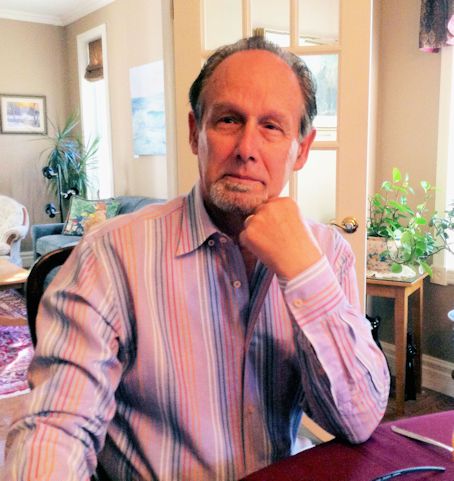 Education: BSc, MSc, PhD, University of British Columbia, Canada. Highest academic position: Professor, Department of Microbiology and Immunology, Queen’s University, Canada. Highest Public Health Agency of Canada position: Senior Research Scientist Distinction: Honorary Foreign Member, Georgian National Academy of Science. I have been working on bacterial virus (bacteriophages, phages) for over 50 years, work that has resulted in over 170 publications in peer-reviewed journals, two books (Bacteriophage: Methods and Protocols, Humana Press, 2009), and 24 book chapters. In addition, I have deposited over 100 DNA sequences with the National Center for Biotechnology Information, the great majority being complete bacteriophage genomes. As the Chair of the Bacterial and Archaeal Viruses Subcommittee of the International Committee on Taxonomy of Viruses and a National Center for Biotechnological Information RefSeq Genome Advisor I take the annotation and taxonomy of deposited phages seriously, communicating changes to my NCBI colleagues on a weekly basis. My earlier works on phages, at Queen’s University (Kingston, Ontario, Canada) resulted in their use in the isolation and characterization of lipopolysaccharide-deficient mutants of Pseudomonas aeruginosa; and, in the production of vector systems for general cloning, promoter identification and site-specific integration in this bacterium. Last, the Pseudomonas phage work resulted in a genomic and glycomic understanding of serotype conversion mediated by phage D3. My work as a Research Scientist at the Laboratory for Foodborne Zoonoses on the development and validation of molecular diagnostic techniques which mimic the Kaufmann-White-Le Minor serological procedure for subtyping Salmonella isolates resulted in sequencing of the genomes of members of all serogroups. Recent work at the University of Guelph with scientists in Pathobiology, and Molecular and Cellular Biology has concentrated on the genomics of swine, horse and fish pathogens. Lastly, I developed and maintain a site (Online Analysis Tools, http://molbiol-tools.ca) of annotated URLs pointing to Internet resources for molecular biologists. Several of these sites were developed at my request.
|
|
|
|
|
|
|
Abstract |
|
|
|
|
From phenotype to genotype and beyond: The impact of DNA sequencing on bacterial diagnostics. |
|
|
|
|
|
Forty years ago, bacterial diagnostics was largely based upon
morphology and phenotype, such as optimum growth temperature,
resistance to certain chemicals, metabolism of various compounds
including amino acids and sugars, and end-product production.
Many of these techniques are still in use today. Indeed, some
are still considered to be "Gold Standards," such as serotyping
for subtyping Salmonella isolates. The development of DNA-based
techniques--including DNA-DNA hybridization, restriction
endonuclease digestions, the polymerase chain reaction (PCR), and
limited DNA sequencing--resulted in a new wave of tools. These
include pulsed-field gel electrophoresis (PFGE), multiple locus
variable number of tandem repeats analysis (MLVA), and multilocus
sequence typing (MLST). Many of these newer approaches have
become genotypic gold standards. Until recently whole genome
sequencing was beyond the financial resources of all but the
largest diagnostic laboratories. All this is changing. To quote
the Danish Technical University’s Center for Genomic Epidemiology
“…within a few years all clinical microbiological laboratories
will have a sequencer in use on a daily basis. The limiting
factor will … not be the cost of the sequencing, but how to
assemble, process and handle the large amount of data in a
standardized way that will make the information useful,
especially for diagnostics and surveillance” (http://www.
genomicepidemiology.org/). This talk will review the past,
present and future of bacterial diagnostics. I wish to
acknowledge my co-authors: Catherine Yoshida, James Robertson,
Eduardo N. Taboada, and John H.E. Nash of the National
Microbiology Laboratory, Public Health Agency of Canada. |
|
|
|
|