|
|
Biography |
|
|
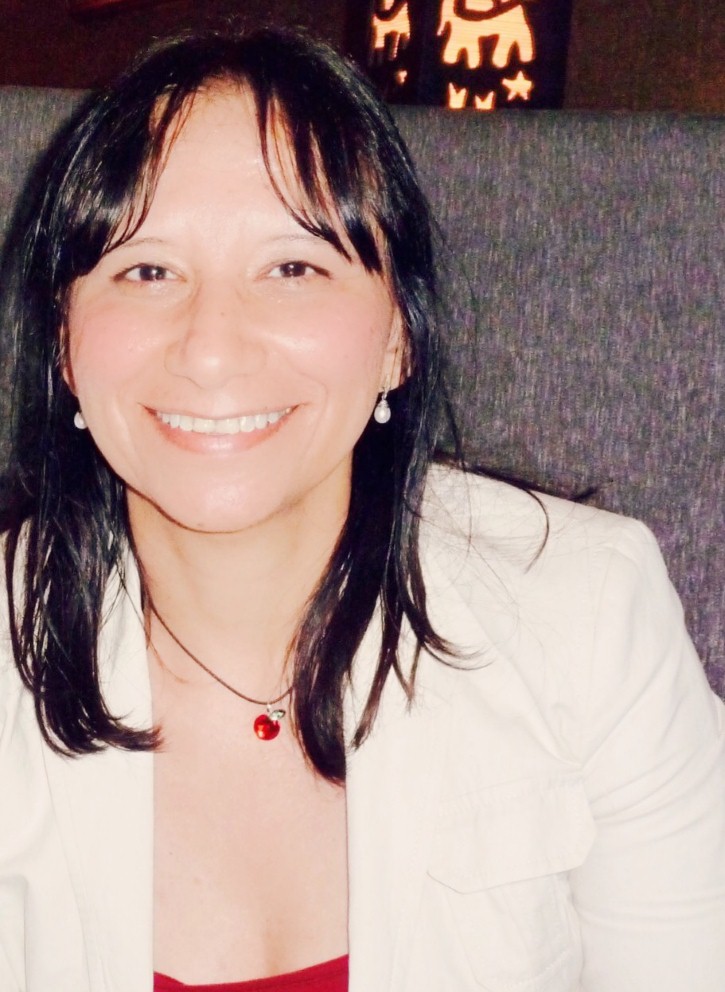 Dr. Amal Kasry received her PhD in Material Science/ Biophysics at the Max Planck Institute for Polymer Research (MPIP), and the Johannes Gutenberg University, Mainz, Germany in 2006. Her major work was using surface plasmon fluorescence spectroscopy (SPFS) in biosensing applications; she developed a biosensor which is of 22 time higher sensitivity than the conventional SPFS sensor. After a one year postdoc at the MPIP, she was a postdoc fellow at the Center of Cell Analysis and Modeling (CCAM) at UConn health center, Connecticut, USA, where she worked on live cell imaging by dark field light scattering. She was then appointed for two years as a research associate at the department of Bioscience in Cardiff University, UK, during this time she led the activity of designing biochips based on DNA Nanotethers to study protein-protein interactions on the surface in collaboration with GE Health Care.
In 2009, she was appointed as a senior research scientist in the Egypt nanotechnology Center (EGNC) in a collaboration project between the Egyptian government and IBM Research; she performed her research at IBM T. J. Watson Research Center in Yorktown Heights, NY, USA. During this time, besides performing her research related to carbon nanomaterials, specifically graphene, she was involved in the strategic conceptual design of the EGNC in Cairo. After a short time as a senior research scientist in the R&D division of the Nitto Denko Asia Technical Center (NAT) in Singapore, she joined the Biosensor Technologies Department at the Austrian institute of Technology (AIT) in Vienna as a scientist to work on OFET biosensors besides graphene related research. In 2015, she joined the Basic Science Department, Faculty of Engineering at BUE. She taught at the faculty of industrial education in Egypt and at the Bioscience department in Cardiff University.
Dr. Kasry is a corresponding author and co-author of several peer reviewed articles and holds several patent applications in the fields of photonics, optical biosensors, protein-protein interactions, fluorescence spectroscopy and carbon nanomaterials, She is also an author of one book and co-author of five book chapters. She was an invited speaker in several international meetings and institutes. She is also a reviewer for AIP, ACS and Wiley.
Dr. Kasry received a fellowship for her PhD from Max Planck Society and was elected to Marquis Who's Who in the World 2011.
Dr. Amal Kasry received her PhD in Material Science/ Biophysics at the Max Planck Institute for Polymer Research (MPIP), and the Johannes Gutenberg University, Mainz, Germany in 2006. Her major work was using surface plasmon fluorescence spectroscopy (SPFS) in biosensing applications; she developed a biosensor which is of 22 time higher sensitivity than the conventional SPFS sensor. After a one year postdoc at the MPIP, she was a postdoc fellow at the Center of Cell Analysis and Modeling (CCAM) at UConn health center, Connecticut, USA, where she worked on live cell imaging by dark field light scattering. She was then appointed for two years as a research associate at the department of Bioscience in Cardiff University, UK, during this time she led the activity of designing biochips based on DNA Nanotethers to study protein-protein interactions on the surface in collaboration with GE Health Care.
In 2009, she was appointed as a senior research scientist in the Egypt nanotechnology Center (EGNC) in a collaboration project between the Egyptian government and IBM Research; she performed her research at IBM T. J. Watson Research Center in Yorktown Heights, NY, USA. During this time, besides performing her research related to carbon nanomaterials, specifically graphene, she was involved in the strategic conceptual design of the EGNC in Cairo. After a short time as a senior research scientist in the R&D division of the Nitto Denko Asia Technical Center (NAT) in Singapore, she joined the Biosensor Technologies Department at the Austrian institute of Technology (AIT) in Vienna as a scientist to work on OFET biosensors besides graphene related research. In 2015, she joined the Basic Science Department, Faculty of Engineering at BUE. She taught at the faculty of industrial education in Egypt and at the Bioscience department in Cardiff University.
Dr. Kasry is a corresponding author and co-author of several peer reviewed articles and holds several patent applications in the fields of photonics, optical biosensors, protein-protein interactions, fluorescence spectroscopy and carbon nanomaterials, She is also an author of one book and co-author of five book chapters. She was an invited speaker in several international meetings and institutes. She is also a reviewer for AIP, ACS and Wiley.
Dr. Kasry received a fellowship for her PhD from Max Planck Society and was elected to Marquis Who's Who in the World 2011.
|
|
|
|
|
|
|
Abstract |
|
|
|
|
New Trends in Nano-Biosensing Technologies and their role in the society development |
|
|
|
|
|
Biosensors is a field that has strongly emerged in the past few decades and grew fast due to its importance in the society, where it is related to three important fields that greatly affect people lives; healthcare, environment and food industry. In this talk, I will discuss this importance, and will go through some of our efforts to develop the technology of a highly optical biosensor to detect biological molecules of small size and low concentrations. I will also briefly mention one application as an example, where a biosensor can be developed to mimic the insect antenna in order to detect some plant diseases |
|
|
|
|