Biography:
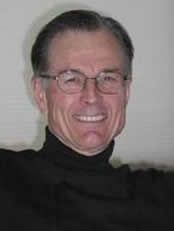
Richard McCray received his Ph.D. in theoretical physics from UCLA in 1967. He was a Postdoctoral Fellow at Caltech (1967-68) and an Assistant Professor at the Harvard College Observatory (1968-71). In 1971, he moved to the Joint Institute for Laboratory Astrophysics at the University of Colorado at Boulder, where he is now George Gamow Distinguished Professor of Astrophysics. He has held visiting positions at the NASA Goddard Space Flight Center (1983), Beijing University and Nanjing University (1987), the Space Telescope Science Institute (1988), Columbia University (1990), and the University of California at Berkeley (1997).
In 1983 Prof. McCray was awarded a Guggenheim Foundation Fellowship and in 1990 he received the Dannie S. Heinemann Prize for Astrophysics of the American Physical Society. In 1989 he was elected to National Academy of Sciences. In 1996 he was appointed Concurrent Professor of Astronomy at Nanjing University. In 2002 he was awarded the NSF Director's Award for Distinguished Teaching Scholars.
Prof. McCray's research is in the theory of the dynamics of the interstellar gas, theory of cosmic X-ray sources, and, most recently, the theory of Supernova 1987A. Notable contributions include: the theory of the "interstellar bubbles" that are blown in interstellar gas by the winds of hot stars; the theory of "superbubbles" (giant holes blown in the gas disks of galaxies by clusters of exploding stars); theoretical models showing how X-rays from neutron stars and black holes are converted to observed ultraviolet and optical emission spectra; and the interpretation of the evolution of the spectrum of Supernova 1987A. Prof. McCray is also engaged in observations of these phenomena with various spacecraft, including the Hubble Space Telescope and the Chandra Observatory.
During the past few years, Prof. McCray has been actively involved in promoting improvement of undergraduate science learning. He leads a multi-departmental effort that aims to introduce more collaborative learning in introductory science classes by employing undergraduates as learning assistants. The program is also intended to attract and prepare talented students for careers in K-12 science education. Prof. McCray is also developing information technology resources for undergraduate science learning.
|