|
✨ Happy New Hijri year ✨
|
|
|
|
|
The World Academy of Sciences for the Advancement of Science in Developing Countries' Arab Regional Partner (TWAS–AREP) and the Center for Special Studies and Programs (CSSP) at the Academic Research Sector, Bibliotheca Alexandrina, wish you a Happy New Hijri Year filled with great achievements, good health, and happiness.
|
|
|
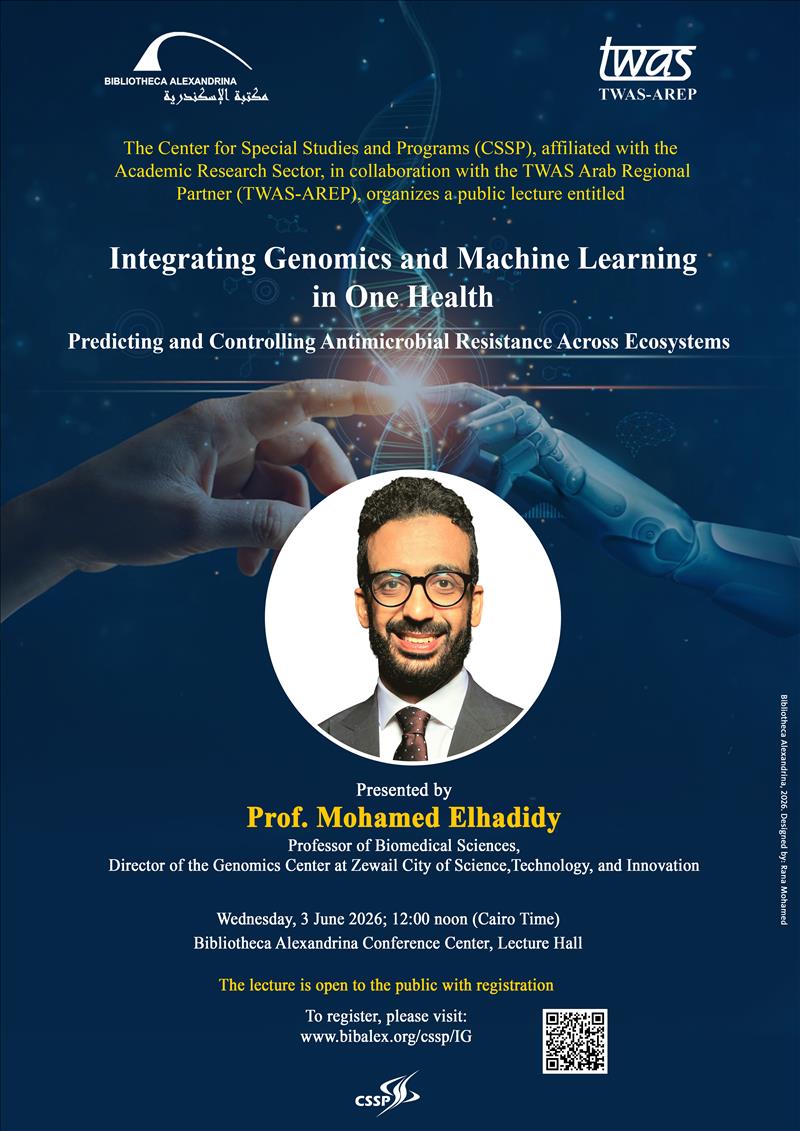
Public Lecture "Integrating Genomics and Machine Learning within the One Health Framework: Predicting and Controlling Antimicrobial Resistance across Ecosystems"
|
|
|
|
|
|
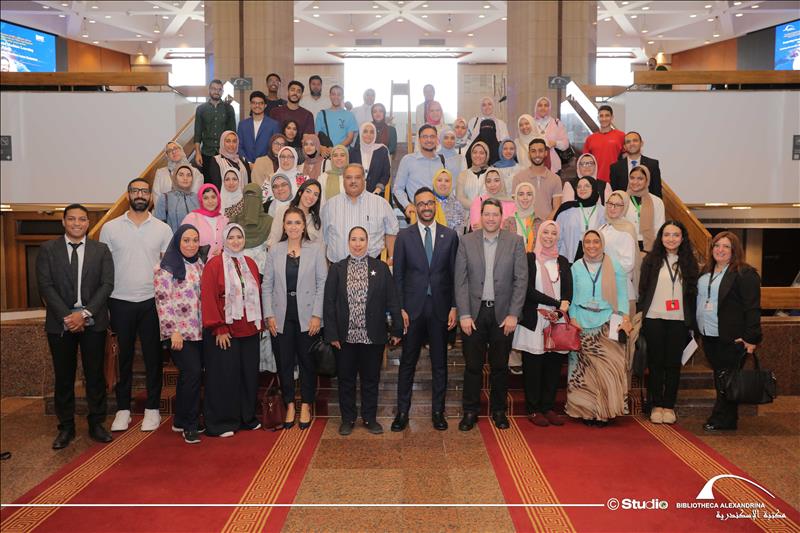
The TWAS Arab Regional Partner (TWAS-AREP) and the Bibliotheca Alexandrina(BA), through the Center for Special Studies and Programs (CSSP), organized a free hybrid lecture titled “Integrating Genomics and Machine Learning within the One Health Framework: Predicting and Controlling Antimicrobial Resistance across Ecosystems” presented by Prof. Mohamed Elhadidy, Professor of Biomedical Sciences, Dean of Graduate Studies, and Director of the Center for Genomics at Zewail City of Science, Technology and Innovation, Egypt, on Wednesday, 3 June 2026 at Bibliotheca Alexandrina Conference Center (BACC), Lecture Hall.
About the Lecture:
Antimicrobial resistance (AMR) and pathogen emergence are increasingly driven by complex interactions across human, animal, and environmental interfaces, demanding integrative and predictive approaches. In this lecture, Prof. Elhadidy presented a holistic One Health framework that integrates microbial genomics, machine learning, and functional validation to decode pathogen evolution, predict high-risk traits, and guide targeted interventions.
Using Staphylococcus aureus as a model organism, the lecture explored:
- Genomic surveillance and transmission dynamics between humans and livestock.
- Predictive modeling of antimicrobial resistance using genome-wide association studies (GWAS) and machine learning.
- The identification of novel genetic determinants linked to virulence and resistance.
- The development of innovative vaccine targets and anti-virulence therapeutic strategies through reverse vaccinology platforms.
The lecture highlighted how integrating genomics, artificial intelligence, and experimental biology can support real-time surveillance and proactive control of antimicrobial resistance within the One Health paradigm.
To watch the full lecture via the Bibliotheca Alexandrina Webcast platform, please click here.
Learn More:
|
|
|
|
|
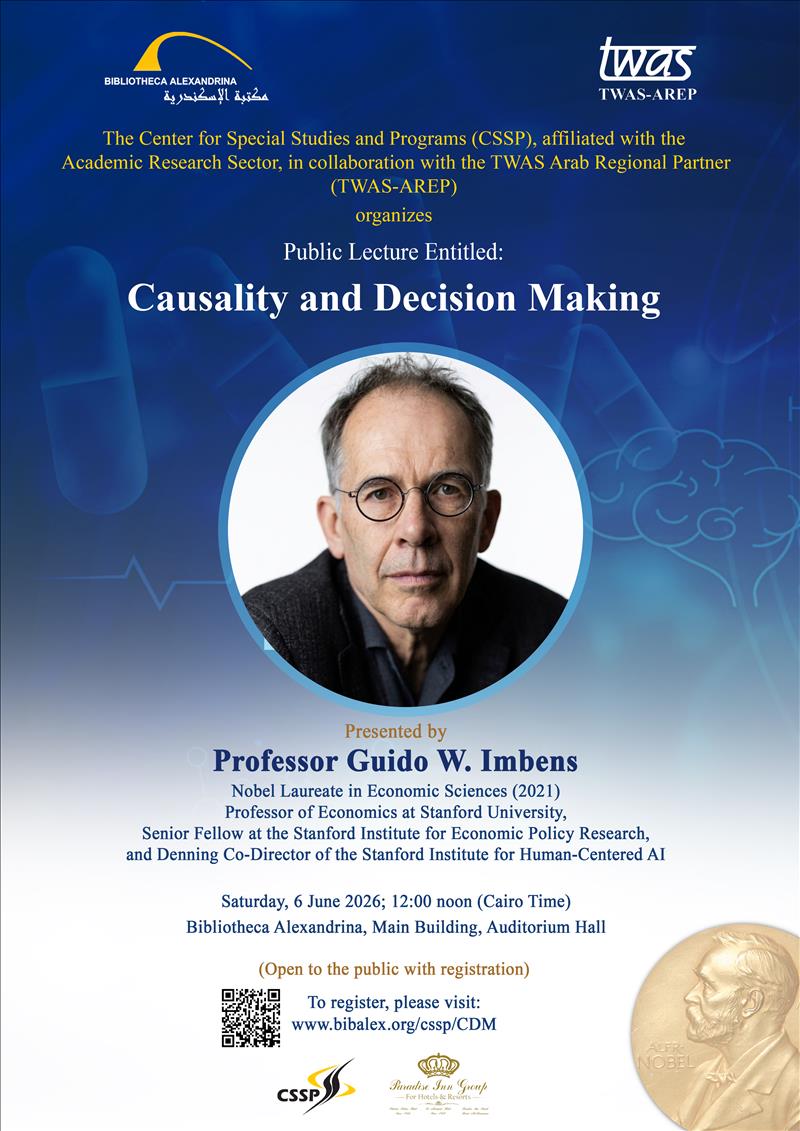
Public Lecture "Causality and Decision Making"
|
|
|
|
|
|
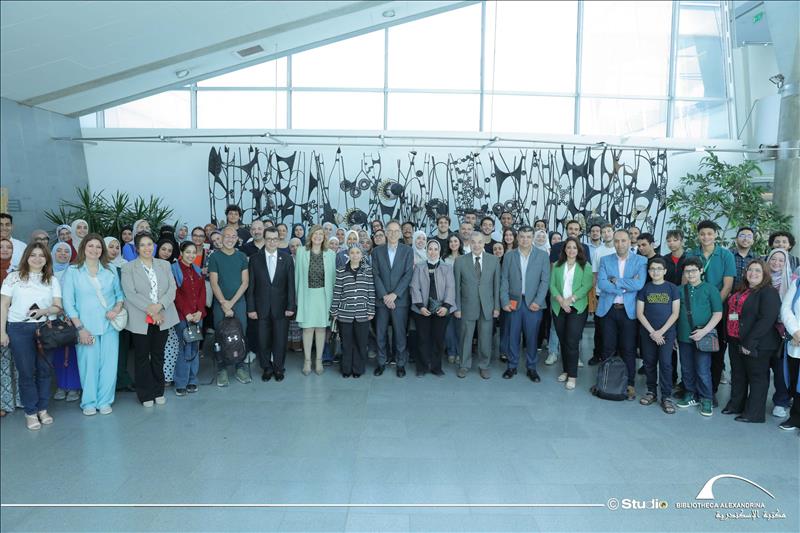
The TWAS Arab Regional Partner (TWAS-AREP) and the Bibliotheca Alexandrina(BA), through the Center for Special Studies and Programs (CSSP), organized a free hybrid lecture titled “Causality and Decision Making” by Prof. Guido W. Imbens, 2021 Nobel Laureate in Economic Sciences, on Saturday, 6 June 2026, at Bibliotheca Alexandrina, Main Building, Auditorium Hall.
Prof. Guido W. Imbens is a Professor of Economics at Stanford University, a Senior Fellow at the Stanford Institute for Economic Policy Research, and the Denning Co-Director of the Stanford Institute for Human-Centered AI. He was awarded the Nobel Prize in 2021 for his groundbreaking contributions to the analysis of causal relationships.
About the Lecture: The goal of modern statistical analysis is often to understand causal effects—the essential "why" behind data that allows leaders to make informed, forward-looking decisions. In this lecture, Prof. Imbens explored:
- Historical Context: The evolution of causality and the foundational role of randomized experiments (e.g., in drug approval processes).
- The Econometric Challenge: Identifying causal relationships within observational studies and the inherent difficulties of this approach.
- The "Credibility Revolution": How the convergence of statistical and econometric traditions has transformed modern research and decision-making.
To watch the full lecture via the Bibliotheca Alexandrina Webcast platform, please click here.
Learn More:
|
|
|
|
|
🧠 Science Diplomacy Meets Neuroscience: Global South Opportunity in Uruguay! ✨
|
|
|
|
|
Applications: 1 Jun 2026 - 30 Jun 2026
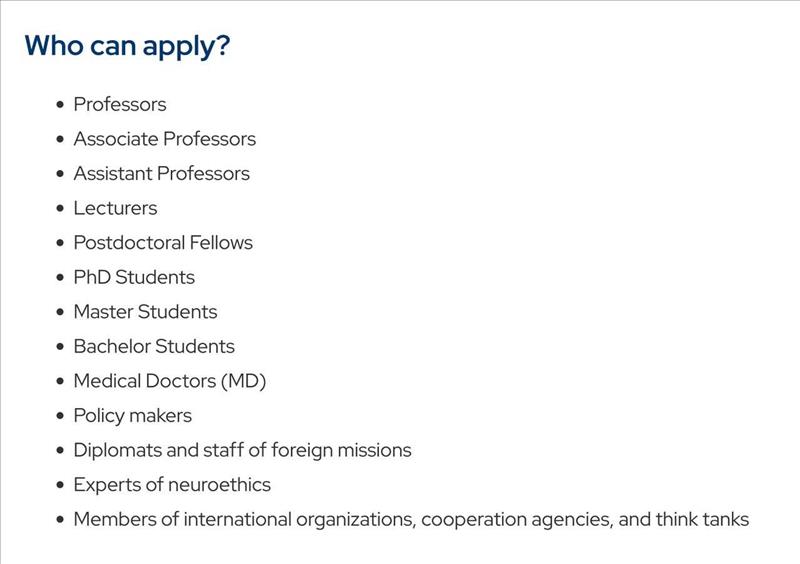
Applications are officially open for the Science Diplomacy, Neuroscience, Technology, and Society (SDNTS) School, co-hosted by IBRO and PEDECIBA in Uruguay! This elite postgraduate initiative trains researchers to bridge the gap between cutting-edge lab science and real-world societal impact.
🌍 Who Can Apply from the Arab Region? As a Global South initiative, this fully funded training welcomes applications from across the Middle East and North Africa.
Eligible Arab nations include:
Egypt | Sudan | Morocco | Algeria | Tunisia | Libya | Jordan | Lebanon | Palestine | Syria | Iraq | Yemen | Mauritania | Somalia | Djibouti | Comoros
🧬 Key Themes:
- How neuroscience and tech inform public policy.
- Addressing societal challenges through scientific knowledge.
- Building international diplomatic bridges using advanced science.
🔗 Check the full details and apply now:
|
|
|
|
|
Call for Nominations: The 2026 UNESCO-Al Fozan International Prize for Young Scientists
|
|
|
|
|
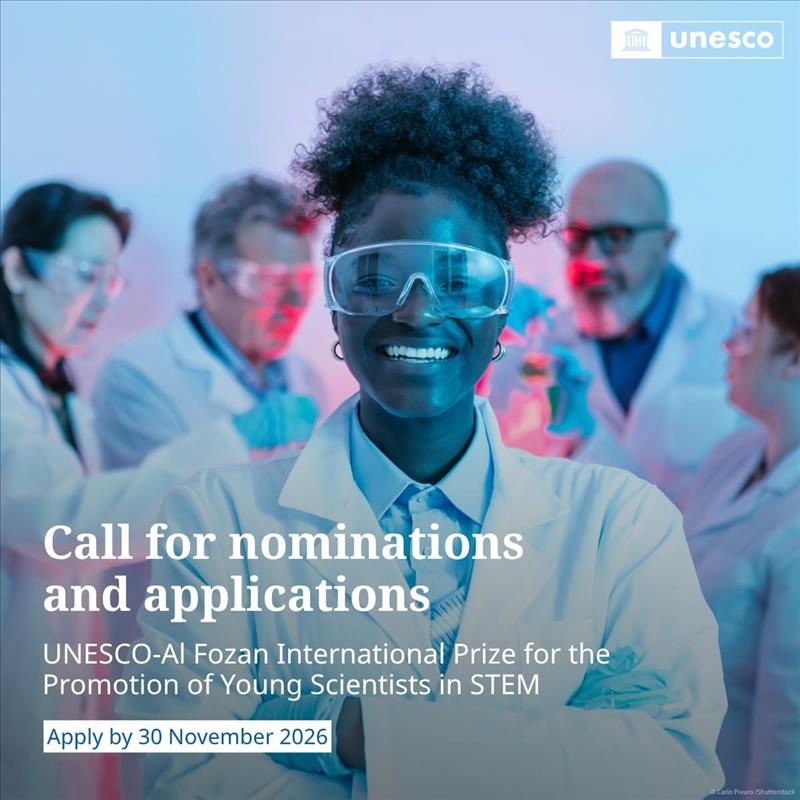
📅 Application Deadline: 30 November 2026
Applications and nominations are now officially open for the 3rd edition of the prestigious UNESCO-Al Fozan International Prize!
This global biennial prize recognizes outstanding young researchers, innovators, and educators whose work drives socio-economic progress and international cooperation.
💰 The Award:
Five laureates—one representing the Arab States—will each receive USD 50,000, alongside a UNESCO medal and diploma.
🧬 Eligibility Criteria
- Age Limit: Must be under 40 years of age at the time of the application deadline.
- Scope of Work: Must demonstrate significant, impactful contributions to STEM research, industrial innovation, education, or regional scientific cooperation.
- Gender Equity: nominations of qualified young women scientists are highly encouraged.
⚠️ Note: Self-nominations will not be considered.
Applications must be officially endorsed and submitted through an eligible nominating body.
Qualified entities include national ministries of higher education, national research councils, universities, scientific academies, and UNESCO chairs.
|
|
|
|
|