|
|
Biography |
|
|
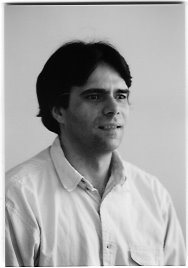 Michael Zervakis holds a Ph.D degree from the University of Toronto, Department of Electrical Engineering, since 1990. He joined the Technical University of Crete on January 1995, where he is currently full professor at the department of Electronic and Computer Engineering. Prof. Zervakis is the director of the Digital Image and Signal Processing Laboratory (DISPLAY) and is involved in research on modern aspects of signal processing, including estimation and constrained optimization, multi-channel and multi-band signal processing, wavelet analysis for data/ image processing and compression, biomedical imaging applications, neural networks and fuzzy logic in automation applications. He has been involved in more than 20 international projects and has published more than 90 papers in related areas of image/signal processing.
|
|
|
|
|
|
|
Abstract |
|
|
|
|
|
|
|
|
Event related brain dynamics entail a variety of activations and oscillations, from phase resetting of ongoing EEG activity in the alpha and theta bands [1] to phase-locked evoked and non phase-locked induced oscillations especially in delta, theta and gamma bands [2]. Their origins relate to multiple task conditions and many stimulus types engaged during the event presentation and execution of its consequent actions [1], which define distinct brain functions, some operating independently and some being coupled [2]. Our study forms a first attempt to address such phase locking issues related to event-related responses. Accordingly, the focus of attention is on the phase or non-phase locked nature of oscillations, which can lead to synchronization and desynchronization of oscillations, rather than the change in non-phase locked power.
In this work we study the involvement of several brain sources in performing a working memory cognitive task and the effects of Alzheimer’s disease in the dynamic coupling of such components. Our working assumption is that the performance of the task triggers certain evoked and induced responses, as expressed by synchronization between different neural assemblies. The organization of such assemblies are severely affected by AD, so that both their activation and interaction during the task performance are altered, resulting in changes in the recorded EEGs of control and AD subjects. More specifically, we employ Independent Component Analysis (ICA) to decompose it into a sum of spatially fixed and temporally independent components [1] that can lead in different spatial distribution patterns, which in turn may be directly attributed to underlying cortical activity. We further consider the synchronization of important components by using the partial directed coherence (PDC), which is a linear method able to derive information on the “driver and response” relationship between observations. Thus, we consider the structure of EEG components not only in their time and frequency content, but also their spatial localization in the brain and their consistency over multiple trials of the experiment.
Overall, our results support the assumption that ICA components can reflect complex underlying mechanisms recorded during the evoked response and characterize distinct aspects of information processing. They also support the assumption that the event-related power measures in specific bands relate to both phase and non-phase locked activity. Thus, the proposed study of ICA components through their phase locking characteristics can provide a more detailed study of the various brain responses. Of course, these initial results need to be validated through extensive experimentation, but they can pave the way for a more holistic consideration of brain activations related to components (or sources) than to frequency bands identified in specific channels.
|
|
|
|
|