|
|
Biography |
|
|
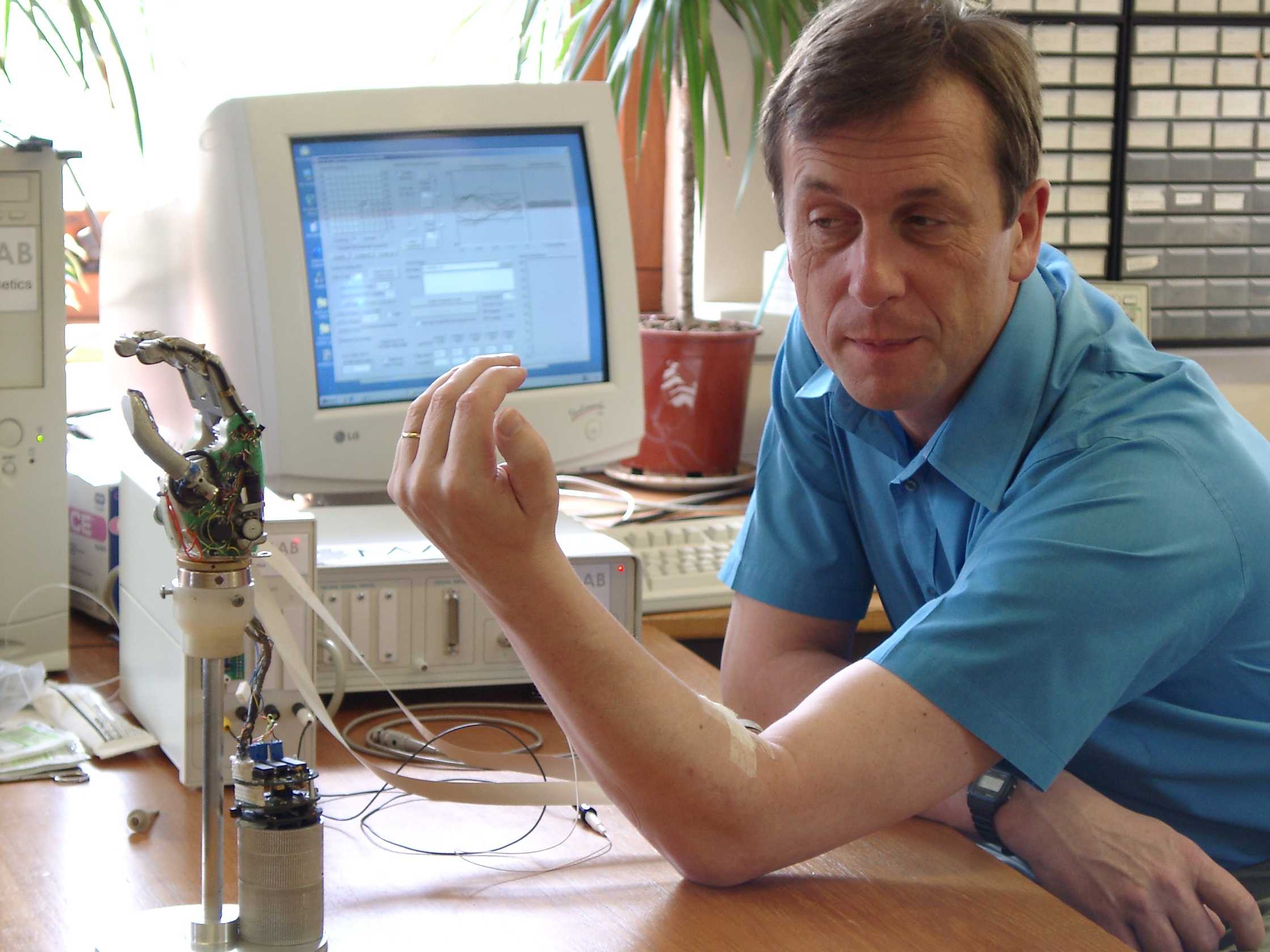 Kevin Warwick is Professor of Cybernetics at the University of Reading, England, where he carries out research in artificial intelligence, robotics and cyborgs. Kevin was born in Coventry and left school to join British Telecom, at the age of 16. At 22 he took his first degree at Aston University, followed by a PhD at Imperial College, London. As well as publishing over 500 research papers, Kevin’s experiments in implant technology promoted his featuring on the cover stories of US magazines. Kevin was awarded DScs by the Imperial College and the Czech Academy of Sciences and received Honorary Doctorates from Aston University and Coventry University. He received The Future of Health Technology Award in MIT, and also the Mountbatten Medal. In 2000 Kevin presented the Royal Institution Christmas Lectures. Kevin’s most recent research involves the invention of an intelligent deep brain stimulator to counteract the effects of Parkinson Disease tremors. Another project involves the use of cultured neural networks to drive robots around. Kevin, though, is renowned for his pioneering experiment which involves a neurosurgical implantation into the median nerve of his left arm to link his nervous system directly with a computer.
|
|
|
|
|
|
|
Abstract |
|
|
|
|
|
|
|
|
The Cyborg Experiments
In this presentation a look is taken at how the use of implant and electrode technology can be employed to create biological brains for robots, to enable human enhancement and to diminish the effects of certain neural illnesses. In all cases the end result is to increase the range of abilities of the recipients. An indication is given of a number of areas in which such technology has already had a profound effect, a key element being the need for a clear interface linking a biological brain directly with computer technology.
The emphasis is clearly placed on practical scientific studies that have been and are being undertaken and reported on. The area of focus is notably the use of electrode technology, where a connection is made directly with the cerebral cortex and/or nervous system.
The presentation will consider the future in which robots have biological, or part-biological, brains and in which neural implants link the human nervous system bi-directionally with technology and the internet.
|
|
|
|
|