|
|
Biography |
|
|
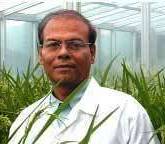 Prof. Swapan Datta, FNAAS, FNASc
Currently, DDG (Crop Science), ICAR, Former Senior Scientist and HarvestPlus Rice Crop leader of CGIAR at IRRI.FELLOW ELECTED 2005, National Academy of Agricultural Sciences, Fellow Elected 2006 National Academy of Sciences India; Former RB Ghosh Professor Chair at University of Calcutta Kolkata, TATA Innovation Fellow (DBT, GOI); Awarded DAAD Fellow at Institute for Resistance Genetics, Gruenbach, Germany; FMI (Friedrich Miecher Institute) Fellow, Basel, Switzerland; Group Leader and Senior Scientist at ETH-Zurich, Switzerland; VA Professor at UC-Davis, USA (1989); Senior Scientist & Plant Biotechnologist at IRRI (International Rice Research Institute)and HarvestPlus Rice Crop Leader(1993-2005); Recipient of Panchanan Maheshwari Medal (2006) and Awarded Paul Johnnes Brouhl Memorial Medal (2009).Significant contributions in Plant Biotechnology, Molecular Breeding, Regulatory aspects and Deployment of transgenic crops in field and Food-safety analysis. IPR-International Agricultural Science Policy and Management; Published more than 120 research papers in referred journals including Nature, Nature Biotechnology,MGG, TAG, Plant Molecular Biology and Molecular Breeding, Plant Journal;
Expert Member in many National committees dealing with Crop Biotechnology, Agriculture Policy, Food and Biosafety and Regulatory issues. World-wide known and recognized as leading Plant Biotechnologist.
Prof. Swapan Datta, FNAAS, FNASc
Currently, DDG (Crop Science), ICAR, Former Senior Scientist and HarvestPlus Rice Crop leader of CGIAR at IRRI.FELLOW ELECTED 2005, National Academy of Agricultural Sciences, Fellow Elected 2006 National Academy of Sciences India; Former RB Ghosh Professor Chair at University of Calcutta Kolkata, TATA Innovation Fellow (DBT, GOI); Awarded DAAD Fellow at Institute for Resistance Genetics, Gruenbach, Germany; FMI (Friedrich Miecher Institute) Fellow, Basel, Switzerland; Group Leader and Senior Scientist at ETH-Zurich, Switzerland; VA Professor at UC-Davis, USA (1989); Senior Scientist & Plant Biotechnologist at IRRI (International Rice Research Institute)and HarvestPlus Rice Crop Leader(1993-2005); Recipient of Panchanan Maheshwari Medal (2006) and Awarded Paul Johnnes Brouhl Memorial Medal (2009).Significant contributions in Plant Biotechnology, Molecular Breeding, Regulatory aspects and Deployment of transgenic crops in field and Food-safety analysis. IPR-International Agricultural Science Policy and Management; Published more than 120 research papers in referred journals including Nature, Nature Biotechnology,MGG, TAG, Plant Molecular Biology and Molecular Breeding, Plant Journal;
Expert Member in many National committees dealing with Crop Biotechnology, Agriculture Policy, Food and Biosafety and Regulatory issues. World-wide known and recognized as leading Plant Biotechnologist.
|
|
|
|
|
|
|
Abstract |
|
|
|
|
|
|
|
|
Increasing Cereal Nutritional quality and Yields
1 Dr. Karabi Datta, 2. Prof. S.K. Datta
1Botany Department, University of Calcutta, 35 Ballygunge Circular Road, Kolkata-700019, India
2Deputy Director General (Crop Science), ICAR, Krishi Bhavan, New Delhi-110014, India
Malnutrition due to micronutrient deficiency is becoming a severe problem in the world including India. About a billion of world population, particularly women and children are suffering from nutrient deficient malnutrition. Vitamin A and iron deficiency are the major outcomes of malnutrition. There is a concern about the nutritional quality of our daily diet. Cereals are an important source of food energy and calories for 50% of the world population. Genetic engineering approach has been employed for biofortification of cereals for enhancement of pro-vitaminA (ß-carotene), iron and zinc in target endosperm tissue, the edible part. Two carotenogenic pathway genes, phytoene synthase (psy) and phytoene desaturase (crtI) were introduced in two popular Asian rice cultivars, IR64 and BR29. Genetic transformation was done using non-antibiotic PositechTM marker system with pmi gene by Agrobacterium-mediated transformation system. In case of antibiotic selection, marker-free transgenic events were selected by co-transformation in Agrosystem. Interestingly, T2 seeds accumulate more carotenoids than the original parental line which might be attributed to post-transgeneration effect. Homozygous lines are being ready for further evaluation. Biofortification of commercial high-yielding rice and other cereals including QPM maize, lysine and carotenoids enriched maize with improved level of lysine, provitaminA and other carotenoids could prove a useful supplement to human diet. Besides genetic engineering approach, Marker Assisted breeding helped in pyramiding a number of genes for agronomically important traits for biotic and abiotic stress tolerance and yield improvement in rice, wheat and maize have been developed.
|
|
|
|
|