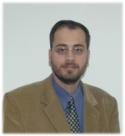
Biography:
Yaqoub Ashhab was born and grew up in Hebron, Palestine. He received his undergraduate biology degree with High Honors from the Middle East Technical University, Turkey in 1990. He received his M. S. and Ph.D. in Molecular Biology from the Autonomous University of Barcelona in 1994 and 1998, respectively. During his work in the laboratory of Prof. Ricardo Pujol-Borrell, he investigated the CC chemokines gene family. In his work he revealed the copy number polymorphisms in some of these genes, which was later proven to be interethnic copy number variations.
In 1999 he joined the laboratory of Prof. Dina Ben-Yehuda in Hadassah Medical Centre, Hebrew University to do his Postdoctoral research in the filed of programmed cell death. During his postdoc, he discovered and characterized the BIRC7 gene that codes for a new member of the Inhibitor of Apoptosis Proteins family. From 2002-2004 he became a research associate in the same research centre.
In 2004 he joined Palestine Polytechnic University in Hebron so as to lead the establishment of a biotechnology research unit that has been funded by the European Commission and the World Bank. He is currently an associate professor of molecular biology and director of Biotechnology Training and Research Unit.
His main interests include Molecular evolution and its impact on host-pathogen interaction, microbial molecular diagnostics and vaccine development using bioinformatics approaches.
He is the author and co-author of 18 scientific articles. He received several awards including the Golda Meer Award in 2002, Lady Davis Postdoctoral Fellowship in 1999 and the Turkish Minister of Higher Education Award in 1990.
Abstract: