|
|
Biography |
|
|
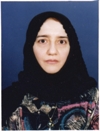 Graduated from Kuwait University, Kuwait ,with honors. Had three fellowships in Genetic and Metabolic Has been awarded several awards including, the Outstanding Investigation Award from the American Federation of Medical Research February 2002. Science Award from European Society of Human Genetics, May 2005, obtained the Outstanding Physician Award from the 10th International Congress of Inborn Errors of Metabolism, Chiba, Japan, Sept 2006; In the presence of HRH Prince Narohito the Crown Prince of Japan. I was honored at the House of Commons, United Kingdom, July 2007. I have been involved in many administrative activities, being involved in several national and international higher medical committees including CAGS (Centre of Arab Genomic Studies), Dubai, UAE I have described a new Genetic Syndrome, which carries my name. I been invited to teach and lecture to several Universities and conferences including Havard Medical School, North Western University, Mount Sinai School of Medicine, Yale University, University of California, Irvine, USA , Ain Shams University, Egypt, World Health Organization Geneva, Centre of Disease Control, USA, University of Oslo and Medical Advisory Board of Biotechnology Oslo, Norway, National Institute of Health (NICHD), USA, Ministry of Health, Morocco, Wellcome Trust Foundation ,Cambridge, UK ,and others. I published over 60 manuscripts, presented over 100 abstracts and gave over 80 invited speeches, nationally and internationally.
|
|
|
|
|
|
|
Abstract |
|
|
|
|
|
|
|
|
Science and Technology in the Muslim World: From Promise to Practice,the Challenges
Muslim nations must take a big leap forward in developing science and technology to catch up with the rest of the world. But to flourish, science and technology need a cultural base that can only be acquired by science education, with an ethical background, and by undertaking research programs. The mentality of political leaders must change to show more of a commitment to science between the 57 Islamic countries that make up the Organization of the Islamic conference (OIC). Saudi Arabia, Qatar and Kuwait spend about 0.2% of their gross domestic product (GDP) on science – less than one-tenth of the developed country average of 2.3% Saudi Arabia is making a good start, having approved a new national science and technology development plan in 2002. Its priorities are defense, and oil and gas technology, but there is also a commitment to devote 1.6% of the nation’s GDP to R&D by 2020. The Custodian of the Two Holy Mosques, HM King Abdullaha Bin Abdulaziz AL Saud has put the foundation for a Science and Technology University, with 10 billions dollars endowment, with partnerships with big science institutions in the United State and Europe. The Emir of Qatar, HH Sheikh Hamad bin Khalifa Al-Thani, has created an endowment that generates millions of dollars in research funding every year. Inherited neurometabolic diseases are prevalent in the Arabian Peninsula and Saudi Arabia because of high degree of consanguineous marriages which accounts for 60 – 70 % of all marriages. They are particularly important since they usually lead to morbidity requiring chronic care and to mortality. In this paper, we address the preventive health aspects of genetic problems in the Muslim world and provide guidelines to prioritize preventive strategies. Applications of various novel genetic techniques such as comprehensive neonatal screening, high throughput heterozygote detection, preimplantation genetic diagnosis, Affymetrix systems, the NanoChip system are discussed.
Ethics and Genetics : An Islamic Perspective
We are at a time of unprecedented increase in knowledge of rapidly changing technology. Such biotechnology especially when it involves human subjects raises complex ethical, legal, social and religious issues. Genetics and biotechnological advances will only be acceptable if their application is carried out ethically, with due regard to autonomy, justice, education and the beliefs and resources of each nation and community. Islam is a religion which encompasses the secular with the spiritual, the mundane with the celestial and hence forms the basis of the ethical, moral and even juridical attitudes and laws towards any problem or situation. Islamic teachings carry a great deal of instructions for scientific advances, health promotion and disease prevention including hereditary and genetic disorders, therefore we will discuss how these teachings play an important role in the diagnostic, management, biotechnical advances, and preventive measures including: genomic research; population genetic screening, including premarital screening, pre-implantation genetic diagnosis; assisted reproduction technology; stem cell therapy , new discoveries and genetic counselling. |
|
|
|
|