To introduce ourselves to each other, we are asking each
participant to submit a brief biographical paragraph. Please
describe your area of expertise and mention any projects you
are currently involved with that relate to the Middle East.
Please e-mail this paragraph to Carolyn
Loether to be added to the workshop URL ( www.sis.pitt.edu/~egyptdlw/)
by January 6.
Dr. Ashraf Hassan Abdelwahab
Prof. Ashraf Abdelwahab is a professor of Computer Engineering, Electronics
Research Institute, Cairo, Egypt. He received his M.Sc. in 1988, Faculty
of Engineering, Cairo University in the area of Artificial Intelligence.
In 1989 he was awarded a Peace Fellowship for his Ph.D. at George Mason
University, Fairfax, VA. In 1992 he received his Ph.D. degree in Machine
Learning and Evolutionary Algorithms. He has published over 50 technical
papers in national and international journals and conferences in the
areas of Evolutionary Algorithms, Machine Learning and Data Mining. Beside
his research activities, Dr. Abdelwahab used to teach Computer Science
courses in Egyptian and American universities.
Dr. Abdelwahab has been working in the IT area since 1986. In 2001, he
worked as a project manager at the Ministry of Communications and Information
Technology (MCIT), managing several projects in the E-government and ICT
for Development programs. Currently, Dr. Abdelwahab is Senior Advisor
to the Minister of State for Administrative Development. He is responsible
of developing, monitoring and coordinating E-government initiatives, supervising
the coordination with other ministries and international relations. |
Dr. Noha Adly
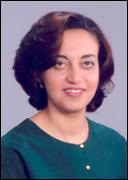 Dr.
Adly is an Associate Professor in the Computer Science
Department, Faculty of Engineering, Alexandria University.
She obtained her Ph.D. in Computer Science at Cambridge
University, UK in 1995. She was a Research Associate
at AT&T Cambridge Research Laboratory (1995-1997)
and a Visiting Researcher (1997-2000). Dr.
Adly is an Associate Professor in the Computer Science
Department, Faculty of Engineering, Alexandria University.
She obtained her Ph.D. in Computer Science at Cambridge
University, UK in 1995. She was a Research Associate
at AT&T Cambridge Research Laboratory (1995-1997)
and a Visiting Researcher (1997-2000).
Since 1997, Dr. Adly has been a Consultant for information systems to several
firms. She has also served as Consultant for Bibliotheca Alexandrina for
the design and installation of its network and its information system.
She is currently the Director of the Information and Communication Technology
(ICT) Department and the International School of Information Science (ISIS)
research center of Bibliotheca Alexandrina.
Dr. Adly is a member of the ACM and the IEEE Computer Society as well as
several other scientific, social and humanitarian organizations. Her research
interests are distributed systems, database systems and digital libraries.
Dr. Adly is also author/co-author of more than 25 publications in peer
reviewed journals and scientific conferences in the field of computer science
and engineering |
Dr. Amr Badawi
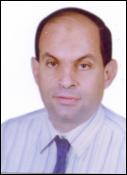 Dr.
Amr Badawi is Senior Advisor to the Minister of Communication
and Information Technology. He handles the development
of the Telecom Sector, and is also involved in policy
development and in providing support to all the telecom
entities such as carriers, ISPs, vendors, etc. Dr.
Amr Badawi is Senior Advisor to the Minister of Communication
and Information Technology. He handles the development
of the Telecom Sector, and is also involved in policy
development and in providing support to all the telecom
entities such as carriers, ISPs, vendors, etc.
Dr. Badawi joined MCIT after a nine-year tenure with
GTE & General
Dynamics. There, he acted as a Program Manager and in several other Technical
Positions in support of the Telecom Sector Support and ICT programs in
Egypt. Prior to his tenure at GTE he founded the Telecom International – Egypt
in 1990. Moreover, Dr. Badawi was Telecom Consultant for several government
and private entities from 1987 – 1995. He also worked as a Development
and System Engineer at Aydin Systems, California from 1984 – 1987.
Dr. Badawi is a professor of Electronics at Cairo University. He received
his B.Sc and M.Sc. degrees in Electronics Engineering from Cairo University.
He also received his Ph.D. degree from Stanford University, California
in 1986. |
Ms. Eglal Bahgat
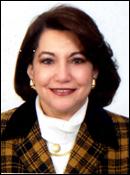 Eglal Bahgat is an expert in documentation and knowledge
management, and a pioneer in using IT for bibliographic
information storage and retrieval. Ms. Bahgat initiated
and managed the implementation of the first Arabic software
for Arab libraries. She headed the National Project of
Egyptian library automation and the Egyptian Libraries
Network for several years. Ms Bahgat is currently Deputy
Director of Center for Documentation of Cultural and
Natural Heritage (CultNat), board member of the Integrated
Care Society and the Mubarak Public Library, as well
as member of the consultancy board of the Maadi Public
Library. She is the project manager of “eternalegypt” website,
a joint project between Cultnat, The Supreme Council
of Antiquities and IBM, a premier website that uses innovative
technologies and services to create an interactive, multimedia
experience of Egyptian cultural artifacts, places and
history for global audience. She is also the project
manager of the Egyptian National Archives Digitization
project. She is an active board member in number of organizations
covering libraries and documentation. She also held various
information positions in the US and Canada. Eglal Bahgat is an expert in documentation and knowledge
management, and a pioneer in using IT for bibliographic
information storage and retrieval. Ms. Bahgat initiated
and managed the implementation of the first Arabic software
for Arab libraries. She headed the National Project of
Egyptian library automation and the Egyptian Libraries
Network for several years. Ms Bahgat is currently Deputy
Director of Center for Documentation of Cultural and
Natural Heritage (CultNat), board member of the Integrated
Care Society and the Mubarak Public Library, as well
as member of the consultancy board of the Maadi Public
Library. She is the project manager of “eternalegypt” website,
a joint project between Cultnat, The Supreme Council
of Antiquities and IBM, a premier website that uses innovative
technologies and services to create an interactive, multimedia
experience of Egyptian cultural artifacts, places and
history for global audience. She is also the project
manager of the Egyptian National Archives Digitization
project. She is an active board member in number of organizations
covering libraries and documentation. She also held various
information positions in the US and Canada. |
Ms. Heather Boyles
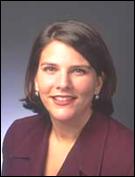 Heather
Boyles is a Director in the Member and Partner Relations
department of Internet2. She has senior management
responsibilities for Internet2's relationships with
infrastructure-related constituencies, including
non-US networking initiatives, US federal research
networks and US-based advanced regional networks.
As part of these responsibilities, Heather serves
as Director, International Relations, overseeing
the building of the Internet2 International Relations
program from its first partnership in 1997 with Canada's
CANARIE organization to over 45 partnerships today
with high-performance research and education networking
organizations from around the world. She has been
involved with numerous global networking initiatives
and organizations, including the Coordinating Committee
on Intercontinental Research Networking (CCIRN),
the Internet Society (ISOC), the G7 Global Interoperability
of Broadband Networks (GIBN) initiative and others. Heather
Boyles is a Director in the Member and Partner Relations
department of Internet2. She has senior management
responsibilities for Internet2's relationships with
infrastructure-related constituencies, including
non-US networking initiatives, US federal research
networks and US-based advanced regional networks.
As part of these responsibilities, Heather serves
as Director, International Relations, overseeing
the building of the Internet2 International Relations
program from its first partnership in 1997 with Canada's
CANARIE organization to over 45 partnerships today
with high-performance research and education networking
organizations from around the world. She has been
involved with numerous global networking initiatives
and organizations, including the Coordinating Committee
on Intercontinental Research Networking (CCIRN),
the Internet Society (ISOC), the G7 Global Interoperability
of Broadband Networks (GIBN) initiative and others.
Heather has been with Internet2 since its inception serving in various
capacities, including Director of Government Relations and Chief of Staff.
She came to Internet2 initially on loan from her previous position as Director
of Policy and Special Projects at the Federation of American Research Networks
(FARNET). At FARNET, she created and wrote FARNET's Washington Update -
a weekly review of policy issues of interest to the network research and
education community. She also served at FARNET as co-principal investigator
on a National Science Foundation grant.
Heather holds a Master's Degree in International Affairs: International
Economic Policy from the American University in Washington, DC and a Bachelor's
Degree in International Studies and German from Indiana University of Pennsylvania. |
Ms. Laura Elizabeth Campbell
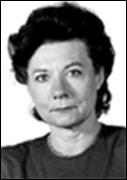 Ms.
Campbell was appointed to the position of associate
librarian for strategic initiatives in 2000 by the
Librarian of Congress, James H. Billington. He noted
that "Laura has already made many significant
contributions to the realization of the Library's
digital future. Her demonstrated leadership, technical
knowledge and network of expert colleagues in the
public and private sectors will bring added strength
to our decision-making process." Ms.
Campbell was appointed to the position of associate
librarian for strategic initiatives in 2000 by the
Librarian of Congress, James H. Billington. He noted
that "Laura has already made many significant
contributions to the realization of the Library's
digital future. Her demonstrated leadership, technical
knowledge and network of expert colleagues in the
public and private sectors will bring added strength
to our decision-making process."
Creation of the position of associate librarian for strategic initiatives
responds to a recommendation contained within the July 26 National Academy
of Sciences report LC21: A Digital Strategy for the Library of Congress.
Responsibilities of the position include overall strategic planning for
the Library, oversight of the Information Technology Services directorate,
and leadership of a new National Digital Information Infrastructure and
Preservation Program to build a nation-wide program to preserve important
digital content.
Ms. Campbell is also the National Digital Library (NDL) director, in which
capacity she led a five-year cooperative national effort to digitize and
make available electronically important and interesting documents of America's
history and culture from libraries and archival institutions throughout
the country. NDL has put in place the award-winning American Memory Web
site that is the cornerstone of the Library's online information service
for the nation. Freely available, the Web site offers more than 8 million
digital items from 138 collections of historical primary source materials.
Ms. Campbell assumed responsibility for the American Memory Program in
1993 and began co-chairing the Library’s Digital Futures Group in
late 1998. She joined the Library in April 1992 as a director of programs
involving the Library's cost-recovery services.
Ms. Campbell was a management and systems consultant for over 18 years
before joining the Library. From 1989 to 1992, she was vice president of
QueTel Corp., a business and systems integration consulting firm, where
she directed consulting engagements in strategic planning and financial
systems, including work for the Library of Congress.
From 1984 to 1989, she was a principal with Arthur Young & Co. (now
Ernst and Young), directing projects for industry and government. She served
as a project manager for the strategic planning review of the Library of
Congress in 1988-89.
Ms. Campbell holds two masters degrees in management and accounting. |
Dr. Timothy W. Cole
Timothy W. Cole is Mathematics Librarian and Professor of Library Administration
at the University of Illinois at Urbana-Champaign. A member of the Library
faculty at Illinois since 1989, he has held prior appointments as Systems
Librarian for Digital Projects and Assistant Engineering Librarian for
Information Services. He is currently principal investigator for an Institute
of Museum and Library Services National Leadership Grant to build a collection
registry and item-level metadata repository for digital collections and
content developed under the auspices of IMLS grant programs. He is past
chair of the National Science Digital Library Technology Standing Committee
and a former member of the OAI Technical Committee. He has published
widely on the use of OAI-PMH, descriptive metadata schemas and implementations,
and the use of XML, MathML, and SGML in scholarly publishing, and has
spoken about these topics at multiple venues including the IMLS Web-Wise
Conference, ALA annual meeting, ASIST annual meeting, AALL annual meeting,
NSDL annual meeting, JCDL, OAI4, and the Open Archives Forum. |
Dr. Jerry Cooper
Jerry Cooper is the W.W. Spence Professor in Semitic Languages in the Near
Eastern Studies Department of The Johns Hopkins University, where he
has taught since 1968, and was department chair from 1984-1991. He did
undergraduate and graduate work at the University of California, Berkeley,
was a Fulbright grantee at the University of Heidelberg in 1964-65, and
received his Ph.D. from the University of Chicago in 1969. In 1975, he
held a visiting appointment at the University of California, Los Angeles,
and in 1981 was Visiting Professor at the University of California, Berkeley.
His main research interests are Sumerian literature, Mesopotamian history,
gender and sexuality in the ancient world, and the early history of writing
systems, and he has published and lectured in all of those areas. From
1972-1988, he was associate editor of the Journal of Cuneiform Studies,
and is currently editor of Mesopotamian Civilizations, a monograph series
published by Eisenbrauns. He is a founding board member of the International
Association for Assyriology and has served on the boards of the American
Oriental Society and the American Schools of Oriental Research, whose Baghdad
Committee he chaired for many years.
Although he was active in getting the university to provide faculty and
students with proper data and text processing facilities in the mid to
late 80s, he has no special technical expertise. As he states in his discussion
paper, his perspective is that of an enthusiastic user. He is currently
a co-investigator in the Johns Hopkins Digital Hammurabi project, which
has developed the technology to make 3D digital scans of cuneiform tablets,
in order to provide scholars with images of tablets that can be rotated,
turned and illuminated from differently angles on screen, much as actual
tablets would be manipulated in a museum. His role has been to let the
hardware and software people know what kind of visual information is necessary
and useful to someone who is reading a tablet, and, if the funding is found
to build and deploy portable 3D scanners, he will initially select the
collections and tablets for scanning, and help devise user-friendly archiving
protocols. |
Dr. Ahmed M. Darwish
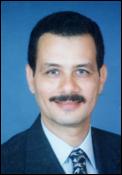 Dr.
Darwish is Minister of State for Administrative Development,
and Professor of Computer Engineering at Cairo University.
He received his Ph.D. in Electrical and Computer
Engineering from the University of California, Davis
in 1988. During the last 3 years prior to becoming
the Minister of State for Administrative Development
he acted as the E-government Program Director at
the Ministry of Communications and Information Technology.
During the academic year 1988/89, Dr. Darwish was
a lecturer and post-doctoral researcher with the
Department of Electrical Engineering and Computer
Science at California University, Davis. He also
joined Cairo University in 1989 as an assistant professor,
where later he became an associate professor then
a professor with the Computer Engineering Department
in 1994 and 1999 respectively. During the year 1996/97;
on sabbatical leave with the Bradley Department of
Electrical and Computer Engineering, Virginia Tech;
Dr. Darwish cooperated on several research projects
with the Mobile and Portable Radio Research Group. Dr.
Darwish is Minister of State for Administrative Development,
and Professor of Computer Engineering at Cairo University.
He received his Ph.D. in Electrical and Computer
Engineering from the University of California, Davis
in 1988. During the last 3 years prior to becoming
the Minister of State for Administrative Development
he acted as the E-government Program Director at
the Ministry of Communications and Information Technology.
During the academic year 1988/89, Dr. Darwish was
a lecturer and post-doctoral researcher with the
Department of Electrical Engineering and Computer
Science at California University, Davis. He also
joined Cairo University in 1989 as an assistant professor,
where later he became an associate professor then
a professor with the Computer Engineering Department
in 1994 and 1999 respectively. During the year 1996/97;
on sabbatical leave with the Bradley Department of
Electrical and Computer Engineering, Virginia Tech;
Dr. Darwish cooperated on several research projects
with the Mobile and Portable Radio Research Group.
Dr. Darwish was a consultant to a number of international
organizations (UNESCO, FAO, ESCWA, European Union
and World Bank), government organizations and companies
both in the United States and Egypt. He led
the team to prepare the National Project Document
on e-government and coordinate the implementation
efforts.
Dr. Darwish received the Egyptian National Engineering Award for
the year 1999. As being a member of few scientific and professional societies
and a reviewer for a number of publications, he shared in the design and
development of two wireless simulation tools. Dr. Darwish has over 56 publications
in journals and scientific conferences, co-authored in 2 books, contributed
to several talks and sponsored research programs. |
Dr. Shahira ElSawy
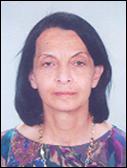 Dr.
Shahira El Sawy is Dean of Libraries and Learning
Technologies at the American University in Cairo. She
first became Director of the AUC Library in
1994/95. In 1998, the position of Director was
elevated to Dean of Libraries and Media Services. In
2000, reflecting the role of the Libraries in technology
and instructional media, the unit Academic Computing
Services merged to form Libraries and Learning Technologies
(LLT). More recently, LLT assumed responsibility
for the University Web, and for a newly established
Center for Learning and Teaching. Dr.
Shahira El Sawy is Dean of Libraries and Learning
Technologies at the American University in Cairo. She
first became Director of the AUC Library in
1994/95. In 1998, the position of Director was
elevated to Dean of Libraries and Media Services. In
2000, reflecting the role of the Libraries in technology
and instructional media, the unit Academic Computing
Services merged to form Libraries and Learning Technologies
(LLT). More recently, LLT assumed responsibility
for the University Web, and for a newly established
Center for Learning and Teaching.
In addition to maintaining its place as the largest
English-language academic library in the region,
LLT services include classroom technologies, a wireless
laptop lab, an adaptive technology corner, assistance with WebCT, a mandatory
course in information literacy as part of the undergraduate curriculum,
and many other functions. The unique collections in Islamic Art and
Architecture and in Egyptology (housed in the Rare Books and Special Collections
Library), in addition to its collection of Arabic holdings, make
the Library's catalog a valuable research tool. Working with the Innovative
Interfaces Library System, the library team pioneered the creation of dual-script
catalog records. The AUC Libraries are members of the Research Libraries
Group. El Sawy serves as the chair of the International Committee of the
Egyptian Library Association.
El Sawy's future plans include further streamlining and collaboration between
the units of LLT, to maximize the potential for enhancing learning and
teaching at the American University in Cairo. She plans for AUC to
become the focus of local and regional co-operative projects. She
is also hoping to move into digitization for the unique parts
of the library's collections such as old architectural photographs. |
Dr. M. Hisham El-Sherif
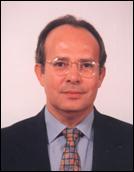 Dr.
Hisham El Sherif received his Ph.D. from MIT in Business
and Engineering. He is currently the Chairman of
IT Ventures; holding direct investment company with
subsidiaries in networking and telecommunications,
software development, IT system integration, media
and e-business. His position as a Founder and Chairman
of Nile Online, had a major role in driving the building
of the Internet backbone in Egypt. Dr. El Sherif
was also a Co-founder and Chair of the Advisory Board,
for 14 years (1985-1999), of the Cabinet Information
and Decision Support Centre. Under his leadership,
IDSC was selected as one of the top 100 IT organizations
in the world. Dr.
Hisham El Sherif received his Ph.D. from MIT in Business
and Engineering. He is currently the Chairman of
IT Ventures; holding direct investment company with
subsidiaries in networking and telecommunications,
software development, IT system integration, media
and e-business. His position as a Founder and Chairman
of Nile Online, had a major role in driving the building
of the Internet backbone in Egypt. Dr. El Sherif
was also a Co-founder and Chair of the Advisory Board,
for 14 years (1985-1999), of the Cabinet Information
and Decision Support Centre. Under his leadership,
IDSC was selected as one of the top 100 IT organizations
in the world.
Dr. El Sherif is a creative builder of institutions and organizations,
among them RITSEC, a regionally recognized leader in software engineering,
multimedia, education, training, culture-ware and the information highway.
Extending his message beyond national boundaries, Dr. El Sherif is a commissioner
of the Washington-based Global Information Infrastructure Commission (GIIC).
He actively served and contributed to the global development agenda jointly
with the World Bank (Info Dev), UNDP, WIPO, WTO, ITC, UNCTAD, ILO, etc..
In addition, he has initiated and helped implementing more than 700 programs
and projects in Egypt, the Middle East, the US and Europe.
Dr. El Sherif has been appointed Chairman of the Advisory Board of the
renowned Egyptian Museum, Chairman of the Egypt Internet Society, member
of Council of the Motherhood and Childhood and Chair of Children with Special
Needs Initiative. Also a member of the Opera Fund, Egypt Culture Fund,
the National Board of Archaeology, as well as the board of the Future Generation
Foundation (FGF). Moreover, he served as a member of the US-Egypt President's
Council until 2002 and has been a professor at the American University
in Cairo since 1983.
Globally recognized for his achievements, Dr. El Sherif has received several
outstanding awards, among them the World First Prize in Information
Systems from SIM in 1998, the Franz Edelman award for Management
Achievements and its Application in 1989 and the IFORS Operation Research
Third World Prize Award in 1987. In addition, Dr. El Sherif was awarded
the First Order Medal of Merit by the president of Tunis in 2004;
the President of France awarded him the French Knighthood in 1991.
Closer to home, H.E. the President of Egypt awarded Dr. El Sherif the First
Order Medal of Science and Arts in 1999. |
Dr. Robert K. Englund
 Dr.
Englund teaches Babylonian languages and history
at the Department of Near Eastern Languages and Cultures
of the University of California, Los Angeles. He
has conducted his major research in Berlin, Heidelberg
and Baghdad, focusing on the proto-cuneiform texts
from late 4th millennium BC Mesopotamia, and, as
director of the project Cuneiform Digital Library
Initiative (CDLI),
on the electronic documentation and edition of cuneiform
generally. He is editor of and contributor to the
online journals Cuneiform Digital Library Journal
and Bulletin (CDLJ&B). Englund finished his BA
at the University of California at Berkeley, and
following a year of graduate work at the University
of Chicago, moved to Munich, where he wrote his dissertation
entitled Verwaltung und Organisation der Ur III-Fischerei
(The Administration and Organization of Ur III Fisheries).
The thesis is concerned above all with the administration
of Babylonian fisheries, emphasizing an analysis
of the accounting terminology in the Ur III period
(ca. 2100-2000 BC) archives as a tool for understanding
the organization and social position of fishermen
and comparable state-dependent workers and supervisors
of household economic units. He conducted post-doctoral
research and taught at the Free University of Berlin
in the 1980's and 90's, and moved to Los Angeles
in 1996. Dr.
Englund teaches Babylonian languages and history
at the Department of Near Eastern Languages and Cultures
of the University of California, Los Angeles. He
has conducted his major research in Berlin, Heidelberg
and Baghdad, focusing on the proto-cuneiform texts
from late 4th millennium BC Mesopotamia, and, as
director of the project Cuneiform Digital Library
Initiative (CDLI),
on the electronic documentation and edition of cuneiform
generally. He is editor of and contributor to the
online journals Cuneiform Digital Library Journal
and Bulletin (CDLJ&B). Englund finished his BA
at the University of California at Berkeley, and
following a year of graduate work at the University
of Chicago, moved to Munich, where he wrote his dissertation
entitled Verwaltung und Organisation der Ur III-Fischerei
(The Administration and Organization of Ur III Fisheries).
The thesis is concerned above all with the administration
of Babylonian fisheries, emphasizing an analysis
of the accounting terminology in the Ur III period
(ca. 2100-2000 BC) archives as a tool for understanding
the organization and social position of fishermen
and comparable state-dependent workers and supervisors
of household economic units. He conducted post-doctoral
research and taught at the Free University of Berlin
in the 1980's and 90's, and moved to Los Angeles
in 1996.
For his work on the digital capture, preservation and dissemination of
cuneiform collections world-wide, Englund was honored with the 2004 Richard
W.
Lyman Award of the National Humanities Center. He is a native of the Pacific
Northwest. |
Mr. John Gage
 John
Gage is Chief Researcher and Vice President of the
Science Office for Sun
Microsystems, an international information technology
company based in California. He was one of the
founders of Sun, in 1982, when a group of students
and professors from Stanford and
the University
of California, Berkeley joined to create open
systems in hardware and software. John
Gage is Chief Researcher and Vice President of the
Science Office for Sun
Microsystems, an international information technology
company based in California. He was one of the
founders of Sun, in 1982, when a group of students
and professors from Stanford and
the University
of California, Berkeley joined to create open
systems in hardware and software.
He has served on the Boards of Trustees of the United States National
Library of Medicine, FermiLabs,
the Mathematical Sciences Research Institute, NetDay, Schools
OnLine, United States National Research
Council, the Internet Society (ISOC) and
other scientific and educational groups.
He serves on the Markle Foundation Task
Force on National Security, the Board of Advisors of the United
States Institute of Peace, the National
Academy of Sciences,and the International Advisory Board of the Malaysian
Multimedia Corridor.
He attended the University of California, Berkeley, Harvard
Business School, and the Harvard
Kennedy School of Government.
See Web site at http://www.johngage.com/pages/bio.html |
Mr. Stephen M. Griffin
Stephen M. Griffin is a Program Director in the Division of Information,
and Intelligent Systems at the National Science Foundation (NSF). He
is currently Program Director for Digital Libraries and Archives. For
the period 1994-2004, Mr. Griffin managed the Special Projects Program
which included the Interagency Digital Libraries Initiatives and the
International Digital Libraries Collaborative Research and Applications
Testbeds program. Prior to joining the Division of Information and Intelligent
Systems, Mr. Griffin served in several research divisions, including
the Divisions of Chemistry and Advanced Scientific Computing, the Office
of the Assistant Director, Directorate for Computer and Information Science
and Engineering, and staff offices of the Director of the NSF. He has
been active in working groups for Federal high performance computing
and communications programs, and serves on numerous domestic and international
advisory committees related to digital libraries and advanced computing
and networking infrastructure. In 2004-2005 he was on special assignment
to the Library of Congress, Office of Stategic Initiatives, to assist
with the National Digital Information and Infrastructure Preservation
Program. His educational background includes degrees in Chemical Engineering
and Information Systems Technology. He has additional graduate education
in organizational behavior and development and the philosophy of science.
His research interests are in topics related to interdisciplinary research
and scholarly communication. He has been active in promoting cultural
heritage informatics and computing and the humanities and arts.
Further information on current and past projects funded through his programs
can be found at: http://www.dli2.nsf.gov/ |
Dr. Kenneth Hamma
Dr. Kenneth Hamma is Executive Director for Digital Policy and Initiatives
at the J. Paul Getty Trust in Los Angeles. He oversees the management
of the Getty Trust website, as well
as strategic planning for information management across all Getty programs
including the Museum, the Research Institute, the Conservation Institute
and the Foundation.
He currently serves as a member of the Joint Committee on Archives, Libraries
and Museums sponsored by the SAA, ALA and AAM; Director of the Museum
Domain Management Association, the sponsor of the museum
TLD; member of the User Advisory Board for Gallery
Systems; and as a member of the advisory board of the American Association
of Museum’s Nazi Era Provenance Internet
Portal. He has served until 2003 as a board member for AMICO,
the Art Museum Image Consortium, a board member for CIMI,
the Consortium for the Interchange of Museum Information, a board member
for NINCH, the National Initiative
for Networked Cultural Heritage, and as an advisor to EU project Artiste and
board member for EU project musEnic.
From 1996 to 2004 Assistant Director for the Getty Museum and from 1987
until 1996 he was Associate Curator of Antiquities. Prior to that, he was
Associate Professor of Greek and Roman archaeology at the University of
Southern California and Associate Director of the Princeton Archaeological
Expedition to Marion, Cyprus. He has published on Greek and Roman art,
on classical theater production, and on policy issues and resource discovery
for cultural heritage online. He holds advanced degrees from Stanford and
Princeton. |
Dr. Mohamed A. Ismail
 Dr. Mohamed Ismail is Professor of Computer Science & Engineering
and former Dean of Engineering, University of Alexandria,
Egypt. He obtained his B.Sc. with Honors and M.Sc. both
from Alexandria University, and his Ph.D. from the University
of Waterloo, Canada. Dr. Mohamed Ismail is Professor of Computer Science & Engineering
and former Dean of Engineering, University of Alexandria,
Egypt. He obtained his B.Sc. with Honors and M.Sc. both
from Alexandria University, and his Ph.D. from the University
of Waterloo, Canada.
Areas of expertise include Intelligent Systems, Computer
Vision, Data Engineering (structures, exploration & mining)
and Medical Computer Science and Applications.
He published more than 70 scientific research papers in
refereed specialized journals and conferences in his areas
of research. Moreover, he supervised/co-supervised more
than 50 Ph.D. and M.Sc. theses in the areas of Computer
Science and Engineering, Information Technology and their
Applications in Medicine and Dentistry. He is also a referee
to several scientific journals and establishments.
Dr. Ismail held teaching and research positions at the
University of Waterloo and the University of Windsor, Ontario,
Canada; the University of Michigan, USA; the UPM, Dhahran,
KSA; and the University of Alexandria, Alexandria, Egypt.
He is also a consultant to several firms in Canada, USA
and Egypt. |
Dr. Lewis R. Lancaster
Professor Emeritus University of California, Berkeley, Department of East
Asian Languages an Culture. Currently President of the University of
the West in California.
Professor Lancaster has long been involved in computer projects, including
the input of religious textual material from Thailand (Pali) (collaboration
with Mahidol University) and Korea (Chinese) (collaboration with Dongguk
University), Nepal (Sanskrit) (collaboration with the Nagarjuna Institute).
In 1997, he organized the Electronic Cultural Atlas Initiative (www.ecai.org),
a part of the research division of the Institute of International Studies
at the University of California, Berkeley. ECAI has worked closely with
the California Digital Library and Academia Sinica in Taiwan. Funding for
the research on the digitization of cultural heritage material has come
from the Lilly Endowment, Luce Foundation, National Science Foundation,
Institute of Museum and Library Services and the University of California.
Professor Lancaster serves on the Board of Directors for the Pacific Neighborhood
Consortium, Executive Committee of the Center for Information Technology
in the Interest of Society, Director of ECAI, and is the former Chair of
the Department of East Asian Languages and Culture (U of California, Berkeley),
Chair of the Center for Korean Studies. In his current role as President
of the University of the West, he is involved with research on Eurasia
including projects in Uzebekistan, Malaysia, China, and Nepal. |
Dr. Ronald L. Larsen
 Dr.
Ron Larsen is the dean of the School
of Information Sciences (SIS) at the University
of Pittsburgh. He served as co-PI with Dr. Howard
Wactlar (CMU) on the NSF-sponsored workshop leading
to the report “Knowledge
Lost in Information – Report of the NSF Workshop
on Research Directions for Digital Libraries.” Dr.
Ron Larsen is the dean of the School
of Information Sciences (SIS) at the University
of Pittsburgh. He served as co-PI with Dr. Howard
Wactlar (CMU) on the NSF-sponsored workshop leading
to the report “Knowledge
Lost in Information – Report of the NSF Workshop
on Research Directions for Digital Libraries.”
Prior to accepting the deanship at SIS, Ron held academic and administrative
positions at the University of Maryland, most recently leading a consortium
of ten Maryland universities as they expanded their computer science, information
science, telecommunications, and related information technology programs
to respond to workforce demands. He was also the Associate Director for
Information Technology of the University of Maryland Libraries.
During the late 1990’s, Ron served as assistant director of the Information
Technology Office at the Defense Advanced Research Projects Agency (DARPA),
where he led research programs in digital libraries, information management,
and cross-lingual information utilization. He also has research and administrative
experience with the National Aeronautics and Space Administration (NASA),
where he developed and managed research programs in computer science, systems
automation, and space robotics.
Dr. Larsen earned a PhD in computer science from the University of Maryland,
following a M.S. in applied physics from the Catholic University of America
and a B.S. in engineering sciences from Purdue University. |
Ms. Ola Wagieh Laurence
Ms. Wagieh is the Director of the Egyptian National
Science and Technical Information Network (ENSTINET),
the Academy of Scientific Research & Technology.
She received her B.Sc of Chemistry from Faculty of Science, Assuit University.
In 1995, Ms. Wageih held the position of a Marketing Manager at the Egyptian
National S&T Information Network (ENSTINET), the Academy of Scientific
Research & Technology then she became a Manager of Finance and
Administration and finally the Deputy Director.
Ms. Wagieh is a member of a committee to develop a national information
system and policies, a committee of the Subscription of the Electronic
Resources for the Egyptian Universities and Research Centers, a committee
on the Computerization of Egyptian Theses, the national committee on
Raising the Egyptian Medical Periodicals, the national committee to
set the national criteria for publishing, a Committee to promote collaboration
between the Egyptian Academy of Scientific Research and Technology
(ASRT) and the Egyptian Universities, Academy of Scientific Research
and Technology Directors Committee (ASRT), Kasr El-Aini Hospital, Cairo
University; CDML Project, Egyptian S&T Community Connectivity Project, and finally Egyptian S&T
Content Portal Project. |
Dr. Richard M. Leventhal
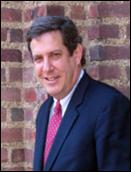 Dr.
Richard M. Leventhal is the Williams Director of
the University of Pennsylvania Museum of Archaeology
and Anthropology and a Professor in the University
of Pennsylvania Department of Anthropology. He has
done extensive archaeological research in Central
America for over twenty-five years; this fieldwork
has resulted in several monographs and books as well
as numerous articles on the ancient Maya. Dr.
Richard M. Leventhal is the Williams Director of
the University of Pennsylvania Museum of Archaeology
and Anthropology and a Professor in the University
of Pennsylvania Department of Anthropology. He has
done extensive archaeological research in Central
America for over twenty-five years; this fieldwork
has resulted in several monographs and books as well
as numerous articles on the ancient Maya.
Dr. Leventhal’s previous positions include
President of the School of American Research in Santa
Fe, Director of the Cotsen Institute of Archaeology
and a professor of anthropology at UCLA. He is a Trustee of the Archaeological
Institute of America, an advisor to the Government of Belize on the development
of a National Museum, and an advisor to several Maya indigenous groups.
Dr. Leventhal is currently involved in two long-term digital projects,
co-chaired by Dr. Stephen Plog of the University of Virginia and funded
by the Andrew W. Mellon Foundation. The first is an ongoing assessment
of the need among archaeologists in the United States for a Center for
Digital Archaeology that would archive databases, create best practice
standards for both the archiving and gathering of archaeological data,
and develop an educational outreach component to assist archaeologists
in the creation of digital datasets. The second project is the creation
of a Chaco Digital Archive related to past excavations and research within
Chaco Canyon.
Most recently, Dr. Leventhal has been working on the creation of an archaeology
special interest group for the world-wide gathering of archaeologists via
high-speed Internet II. He is also working to develop, with the use of
Internet II, increased virtual access to the Penn Museum and its exhibits
for classes of all ages throughout the world. |
Ms. Melissa Smith Levine
Melissa Smith Levine is the associate director for
finance and administration for The Wolfsonian-Florida
International University, a museum and special
collection library that examines design how art
and design objects from the modern era (1885-1945)
shape and reflect the human experience. Before
joining The Wolfsonian in 2003, she served as the
acting director for the World Bank’s Art Program where she organized numerous exhibits
of contemporary art from around the world. As counselor to the Library
of Congress’ National Digital Library Project, American Memory
from 1996 to 2001, Ms. Levine worked on legal and public policy matters
related to intellectual property. Ms. Levine handled business affairs
for the Smithsonian Institution from 1990 to 1996. She holds an art
history and history degree from Emory University and a law degree from
the University of Miami. |
Dr. Joan K. Lippincott
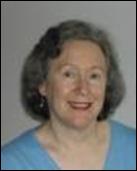 Dr.
Joan K. Lippincott is the Associate Executive Director
of the Coalition for Networked Information (CNI),
a joint project of the Association of Research Libraries
(ARL) and EDUCAUSE. CNI, an institutional membership
organization, advances the transformative promise
of networked information technology for the advancement
of scholarly communication and the enrichment of
intellectual productivity. She has been with CNI
since 1990. Dr.
Joan K. Lippincott is the Associate Executive Director
of the Coalition for Networked Information (CNI),
a joint project of the Association of Research Libraries
(ARL) and EDUCAUSE. CNI, an institutional membership
organization, advances the transformative promise
of networked information technology for the advancement
of scholarly communication and the enrichment of
intellectual productivity. She has been with CNI
since 1990.
At CNI, Joan has provided leadership for programs
such as New Learning Communities, Assessment of the
Networked Environment, Working Together, and collaborative
facilities and learning spaces. She has written articles
and made presentations on such topics as networked information, learning
spaces, collaboration among professional groups, assessment, and teaching
and learning in the networked environment. Her chapter on “Net Generation
Students and Libraries” in an EDUCAUSE book on Educating the Net
Gen www.educause.edu/educatingthenetgen/ has received wide distribution.
Joan previously held positions at Cornell University, George Washington
University, Georgetown University, and SUNY at Brockport. In addition,
she worked at the Research and Policy Analysis Division of the American
Council on Education and the National Center for Postsecondary Governance
and Finance at the University of Maryland.
Joan received her Ph.D. in higher education policy, planning, and administration
from the University of Maryland, her M.L.S. from SUNY Geneseo, and an A.B.
from Vassar College.
Additional information is available at:
http://www.cni.org/staff/joan_index.html |
Dr. Maurice Abou El Saad Mikhail
Dr. Maurice is currently the Director of Mubarak Public Library since 1999.
He received his Ph.D. and M.Sc degrees from Faculty of Science, Cairo
University in 1980 and 1972 respectively. He also received B.Sc. degree
from Faculty of Science, Assiut University in 1963.
Dr. Maurice served as the General Director of the Central Library, the
National Information and Documentation Center, from 1997 till 1999. He
delivered special courses as the “Scientific Editing and Publishing” ,
Catholic University, “Fundamentals of Proofreading and Copyediting”,
and “The Magazine Editor”, George Washington University.
Other courses were also about Association Publishing, the curriculum of “The
Publishing Institute”, University of Denver, and on-the-job
training on “Technical Editing and Publication Production” at
Franklin Institute, Philadelphia.
Dr. Maurice has numerous publications including "Towards the
Electronic Editing to Produce the NIDOC Publications" and "From
Word Processing to Page Making in Arabic Texts" at "The
9 th International Conference of Science Editors", Egypt; on "Science
Communication for the Next Millennium", June 7-11, 1998, “The
Cooperation Concepts in The Academic Publishing: Author-Publishing Relationship” presented
at a Seminar on “The Era of Electronic Publishing”,
Saudi Arabia, 2001.
Other articles include "Academic Publishing: Its Definition and
the Role of University Presses,” (in Arabic), "Scientific
Editing, Copyediting, and Proofreading: Instructions & Guidelines," (in
Arabic), "Use of High Technology for Developing Training on Scientific
Publishing," and "The Electronic Library and the Role
of Training to Use Its Holdings" (in Arabic). Finally, "Digital
Systems and Their Contributions in Developing Special Libraries" (in
Arabic) and “Mubarak Public Library as a Model of Modern Management
of Libraries in Egypt”.
Dr. Maurice is a member of the Board of the Egyptian Geological Society,
ASIS in USA, ESIT (the Committee to consider the basic rules for publishing
the Journal of King Saud University). Moreover, he also was a member
of the Board, The Egyptian Cultural Center, The Egyptian Embassy at Riyadh,
Saudi Arabia, from 1992-1995, Permanent Committee for Scientific Research & Academic
and Cultural Relations, Organizing Committee of The 9 th International
Conference of Science Editors", member of Developing the Library
of the National Information and Documentation Center, Cairo, 2003, member
of the Book and Publishing Committee at the Supreme Council of Culture,
Ministry of Culture, Egypt, 2003, member of the Technical Committee of
Collection Development Fund, Ministry of Culture, 2004, and finally,
member of the Board of Directors of the Egyptian National Agriculture
Library, from 2001 up till now. |
Dr. Magdy H. Nagi
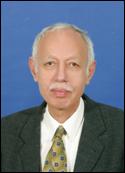 Dr.
Nagi is a Professor in the Computer Science department,
Faculty of Engineering, Alexandria University. He
obtained his Ph.D. from the University of Karlsruhe
in 1974, where he served as Lecturer for two years
and as a Consultant to its Computer Center from 1974-1990.
During this period he also served as Consultant to
many companies in Germany such as Dr. Otker, Bayer,
SYDAT AG, and BEC. Dr.
Nagi is a Professor in the Computer Science department,
Faculty of Engineering, Alexandria University. He
obtained his Ph.D. from the University of Karlsruhe
in 1974, where he served as Lecturer for two years
and as a Consultant to its Computer Center from 1974-1990.
During this period he also served as Consultant to
many companies in Germany such as Dr. Otker, Bayer,
SYDAT AG, and BEC.
On the national level he was a Consultant to many projects under the umbrella
of either the University of Alexandria or the Faculty of Engineering for
designing and/or implementing automation projects for governmental authorities
or public sector companies, such as the Ministry of Interior, the Health
Insurance Organization (HIO), the Social Insurance Organization (SIO),
and the Customs Authority.
Since 1995, Dr. Nagi has served as Consultant to Bibliotheca Alexandrina.
Among his activities are the design and installation of Bibliotheca Alexandrina’s
network and its information system as well as the design and implementation
of the library information system, namely a trilingual information system
that offers full library automation. He is currently serving as the Head
of the Information and Communication Technology (ICT) Sector and the Director
of the International School for Information Science (ISIS) at Bibliotheca
Alexandrina.
Dr. Nagi is a member of the ACM and the IEEE Computer Society as well as
several other scientific organizations. His main research interests are
in operating systems and database systems. He is author/co-author of more
than 80 papers. |
Ms. Ann Okerson
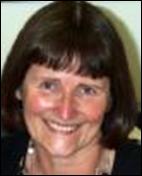 Most
recently, Ann Okerson has served as Associate University
Librarian for Collections & International Programs
at Yale University. Her previous work includes academic
library and library management experience, several
years in the commercial sector, and service ase a
senior program officer at the Association of Research
Libraries, where she was Director of the Office of
Scientific and Academic Publishing. In that role,
she was active nationally in working with librarians,
academics, and vendors to identify and address the
most urgent issues raised for librarianship by the
emergence of networked information technology in
the 1990s. Most
recently, Ann Okerson has served as Associate University
Librarian for Collections & International Programs
at Yale University. Her previous work includes academic
library and library management experience, several
years in the commercial sector, and service ase a
senior program officer at the Association of Research
Libraries, where she was Director of the Office of
Scientific and Academic Publishing. In that role,
she was active nationally in working with librarians,
academics, and vendors to identify and address the
most urgent issues raised for librarianship by the
emergence of networked information technology in
the 1990s.
Arriving at Yale in 1996, she organized the Northeast Research libraries
consortium (NERL), a group of 26 large research libraries and 40 smaller
affiliates. NERL negotiates licenses for electronic information and engages
in other forms of cooperative activity. Ms. Okerson serves as one of the
active, founding spirits of the International Coalition of Library Consortia
(ICOLC) and an advisor to the Soros eIFL project.
Okerson's activities include numerous projects, publications, advisory
boards, and speaking engagements around the world, as well as professional
awards. In 1997, with funding from the Council on Library and Information
Resources, she and the Yale Library staff mounted an online educational
resource about library licensing of electronic content in a project called
LIBLICENSE. Its extensive annotations and links are complemented by Liblicense-l,
an international, moderated online discussion list frequented by nearly
3,000 librarians, publishers and attorneys. In 1998, she secured an additional
grant and created Liblicense software that enables the users to generate
a customized license using standard language options. In April 2001, the
Digital Library Federation endorsed the Project's work on a Model Electronic
License for academic research libraries.
Other recent activities include being a Principal Investigator on several
cutting-edge grants, including two rounds of funding from the U.S. Department
of Education's Title VI TICFIA program for building components of a Middle
East Virtual Library, an NEH grant for digitizing Iraqi scholarly journals,
and a Teagle Foundation grant for improving liberal arts teaching through
use of library special collections. Just announced is funding from two
US foundations, which will support the launch of OARE, a journals access
project for developing nations. OARE does for the environmental sciences
what HINARI does for Health and Life Sciences and AGORA for agricultural
journals. Okerson is co-PI on this grant, partnered between Yale University
and agencies of the United Nations. |
Mr. Sam Quigley
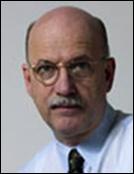 Sam
Quigley is the Director of Digital Information and
Technology at the Harvard University Art Museums
(www.artmuseums.harvard.edu),
where he heads a major institutional initiative to
digitize the wealth of research and scholarship activity
at the Art Museums (the Arthur M. Sackler Museum,
the Busch-Reisinger Museum, and the Fogg Art Museum).
Designing efficient imaging work flow systems, as
well as publicly searchable database interfaces on
the Web, are presently the primary focus in his work. Sam
Quigley is the Director of Digital Information and
Technology at the Harvard University Art Museums
(www.artmuseums.harvard.edu),
where he heads a major institutional initiative to
digitize the wealth of research and scholarship activity
at the Art Museums (the Arthur M. Sackler Museum,
the Busch-Reisinger Museum, and the Fogg Art Museum).
Designing efficient imaging work flow systems, as
well as publicly searchable database interfaces on
the Web, are presently the primary focus in his work.
Formerly the Keeper of Musical Instruments and Associate
Curator of European Decorative Arts at the Museum
of Fine Arts, Boston for about ten years, Quigley
switched roles in1995 to become the MFA’s first
Manager of Collections Information. In that capacity,
he lead the development of a museum-wide collections
information database of roughly 400,000 electronic
object records. Sam Quigley served as Director of Collections at the San
Francisco Museum of Modern Art in 2000-2001 before he accepted his current
position at Harvard. An elected member of the Board of Directors of the
Museum Computer Network (www.mcn.edu)
since 1996, he recently completed a two year term as that organization’s
president.
Quigley holds a Masters degree in Musicology from Wesleyan University,
and remains an active performer of Javanese gamelan music. He has published
on musical instruments and ethnomusicology and is a frequent speaker on
policy issues related to collections automation at a variety of national
and international conferences. His recent talks include:
- Data Management II: Best Practices Case Study
at the Harvard University Art Museums – AAM
annual meeting in May 2005
- Digital Preservation Policy Development in Art
Museums, A Survey of Nine Art Museums
in the USA – SAA
annual meeting in August 2004
- Digital Asset Acquisition, Preservation, and
Delivery, Leveraging Bar-Code and
Direct Digital Technologies in a Turbo-Charged Collection
Inventory – APEC
Taiwan meeting in March 2004
|
Dr. Joyce Ray
Dr. Joyce Ray is Associate Deputy Director for Library
Services at the US Institute of Museum and Library
Services (IMLS), a federal agency dedicated to
enhancing museum and library services nationwide.
She directs grant programs that distribute approximately
$40 million per year to libraries, institutions
of higher education, and other organizations throughout
the nation and, through international partnerships,
beyond the US. She also has responsibility for
agency-wide digital initiatives. Program focus
areas include grants for research and development
of digital libraries, education of librarians,
and projects to promote collaboration among libraries,
museums, and other organizations. Before joining
IMLS in 1997, she held positions at the National
Archives and Records Administration and the National
Historical Publications and Records Commission.
She has a Ph.D. in American History and a Master’s degree in Library
Science, both from The University of Texas at Austin. IMLS has funded
several digitization projects relating to Middle East collections in
US institutions, including projects at the University of Chicago’s
Oriental Institute and the Center for American Overseas Research Centers.
IMLS currently supports the IMLS Digital Collections and Content project
at the University of Illinois Urbana Champaign, directed by Tim Cole,
and the Discover Babylon project at the University of California Los
Angeles, directed by Robert Englund. Both projects will be highlighted
at the Digital Library of the Middle East workshop. |
Dr. Malcolm Read
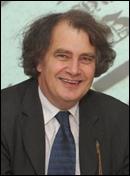 Dr.
Malcolm Read graduated in 1973 with a degree in Environmental
Science from the University of East Anglia and went
on to do a PhD at the University of Manchester on
the hydrometeorology of a glacial catchment. He then
worked in the Overseas Development Administration
before moving to the Natural Environment Research
Council (NERC) in 1979. He ran the computer department
at the Institute of Hydrology before moving into
administrative computing to head the Joint Administrative
Computing Service of NERC and the, then, Science
and Engineering Research Council in 1988. Dr.
Malcolm Read graduated in 1973 with a degree in Environmental
Science from the University of East Anglia and went
on to do a PhD at the University of Manchester on
the hydrometeorology of a glacial catchment. He then
worked in the Overseas Development Administration
before moving to the Natural Environment Research
Council (NERC) in 1979. He ran the computer department
at the Institute of Hydrology before moving into
administrative computing to head the Joint Administrative
Computing Service of NERC and the, then, Science
and Engineering Research Council in 1988.
Since July 1993 Dr Read has worked for the Higher and Further Education
Funding Councils as the Executive Secretary to the Joint Information Systems
Committee (JISC). Apart from his overall responsibility for the Executive
he has been particularly involved in ICT policy and strategy development
in post 16 education and research. He is also Chairman of the European
Networking Policy Group. |
Dr. Fathi Saleh
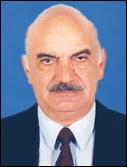 Dr.
Saleh is a Professor of Computer Engineering at Cairo
University and the Director of the Center for Documentation
of Cultural and Natural Heritage (CultNat), which
is part of Bibliotheca Alexandrina with the support
of the Ministry of Communications and Information
Technology. He is also a Member of the Supreme Council
of Culture. From 1995 to 1997, he occupied the position
of Cultural Councilor at the Embassy of Egypt in
Paris, and from 1997-1999, he was the Ambassador
of Egypt to the UNESCO. Dr Saleh graduated from the
Faculty of Engineering, Cairo University and obtained
his Ph.D, Diplôme d’Études
Approfondies and Certificat d’Études
Supérieures from the University of Paris,
France. His main interest is applying new technologies
in the different fields of Cultural and Natural Heritage. Dr.
Saleh is a Professor of Computer Engineering at Cairo
University and the Director of the Center for Documentation
of Cultural and Natural Heritage (CultNat), which
is part of Bibliotheca Alexandrina with the support
of the Ministry of Communications and Information
Technology. He is also a Member of the Supreme Council
of Culture. From 1995 to 1997, he occupied the position
of Cultural Councilor at the Embassy of Egypt in
Paris, and from 1997-1999, he was the Ambassador
of Egypt to the UNESCO. Dr Saleh graduated from the
Faculty of Engineering, Cairo University and obtained
his Ph.D, Diplôme d’Études
Approfondies and Certificat d’Études
Supérieures from the University of Paris,
France. His main interest is applying new technologies
in the different fields of Cultural and Natural Heritage. |
Mr. Nezar Nabil Sami
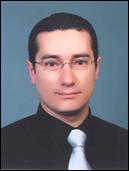 As
manager of the Computer Support Department, Egyptian
National S&T Network (ENSTINET), Mr. Nezar Sami
is involved in setting technologies strategies for
ENSTINET and S&T community in Egypt as well as
managing and operating the Egyptian Research Centers
Network. Mr. Sami provides technical consultations
for different Egyptian Research Centers and other
institutions and acts as the technical coordinator
between ENSTINET and international organizations
such as Internet2, RIPE NCC, AfriNIC and others. As
manager of the Computer Support Department, Egyptian
National S&T Network (ENSTINET), Mr. Nezar Sami
is involved in setting technologies strategies for
ENSTINET and S&T community in Egypt as well as
managing and operating the Egyptian Research Centers
Network. Mr. Sami provides technical consultations
for different Egyptian Research Centers and other
institutions and acts as the technical coordinator
between ENSTINET and international organizations
such as Internet2, RIPE NCC, AfriNIC and others.
Mr. Sami represents the Academy of Scientific Research & Technology
in a number of activities such as the Egyptian IPv6 Task Force, Internet
Society of Egypt, E-Commerce Committee and E-Learning Committee.
Mr. Sami graduated from Communications & Electronics Engineering Dept,
Cairo University and later obtained several certificates in the field of
management, including Executive Management Diploma, Total Quality Management
Diploma, and Project Management Professional Certificate, all from the
American University in Cairo (AUC). He also holds several international
technical certifications in fields of Networking, Video Conferencing and
Project Management and is recipient of a number of local and national awards
in recognition of his work. |
Dr. Ismail Serageldin
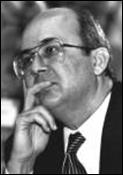 Dr.
Serageldin is the Director of the newly established
Bibliotheca Alexandrina in Egypt, and chairs the
Boards of Directors for each of the seven research
institutes and three museums affiliated to the Bibliotheca
Alexandrina. Dr.
Serageldin is the Director of the newly established
Bibliotheca Alexandrina in Egypt, and chairs the
Boards of Directors for each of the seven research
institutes and three museums affiliated to the Bibliotheca
Alexandrina.
Previously he served as Vice President of the World Bank (1992-2000), Chairman
of the Consultative Group on International Agricultural Research (CGIAR,
1994-2000), Chairman of the Consultative Group to Assist the Poorest (CGAP),
a micro-finance program (1995-2000), Chairman of the Global Water Partnership
(GWP, 1996-2000), and Chairman of the World Commission for Water in the
21st Century (1998-2000). Dr. Serageldin worked in a number of capacities
at the World Bank (1972-2000) and has published and lectured widely.
He holds a Bachelor of Science in engineering degree from Cairo University,
and a Masters' degree and a Ph.D. from Harvard University and has received
15 honorary doctorates. Dr. Serageldin currently serves as Distinguished
Professor at Wageningen University in the Netherlands and as chair and
member of a number of advisory committees for academic, research, scientific,
and international institutions and civil-society efforts. He has written
more than 50 books and monographs (edited or authored) and 200 articles,
book chapters, and technical papers on various topics. |
Dr. Samir Ibrahim Shaheen
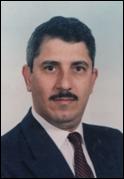 Prof.
Samir I. Shaheen, Professor of Computer Engineering,
Dean Faculty of Engineering, Cairo University, Egypt.
He was born in Egypt in 1948. He obtained his B.Sc.
and M.Sc. in Electronics and Communication Engineering,
Cairo University in 1971 and 1974 respectively. In
1979, he received his Ph.D. from McGill University
in Computer Vision. His main research activities
are concerned with Knowledge Engineering, Computer
Vision, Intelligent Systems and Computer Networks. Prof.
Samir I. Shaheen, Professor of Computer Engineering,
Dean Faculty of Engineering, Cairo University, Egypt.
He was born in Egypt in 1948. He obtained his B.Sc.
and M.Sc. in Electronics and Communication Engineering,
Cairo University in 1971 and 1974 respectively. In
1979, he received his Ph.D. from McGill University
in Computer Vision. His main research activities
are concerned with Knowledge Engineering, Computer
Vision, Intelligent Systems and Computer Networks.
Prof. Shaheen is the Vice chairman of IEEE Egypt Section and is a member
of ACM, and the Egyptian Society for Engineers. He is the founder of Cairo
University campus wide optical fiber network and the automation of Cairo
University information systems. He is also a member of the Egyptian Science
Academy for the board of Communication and Information Technology and the
Chairman of the Information Technology Section. Prof. Shaheen worked for
UNESCO and the Ministry of Communication and Information technology for
several projects in E-Learning/Training. He is the founder for the E-Learning
Initiative in Egypt in the Ministry of Communication and Information Technology.
He was the director of the Telemedicine project in Egypt. He has several
projects with the European Union in GIS and E-Learning. He has more than
95 scientific papers published in International conferences and journals. |
Mr. Dale Smith
Dale Smith is the Director of Network Services at the University of Oregon
and is the Principal Investigator for the National Science Foundation
grant (OISE award 0334176) that provides core funding for the Network
Startup Resource Center (http://www.nsrc.org).
The Network Startup Resource Center (NSRC) provides technical information,
engineering assistance, training, and equipment to research institutions
and networking organizations in developing areas. The primary goal is
to make it easier for US scientists and engineers, and those in developing
areas, to collaborate via the Internet. The NSRC provided assistance
in establishing the first Internet connectivity to Egypt in 1993.
In addition to his work with the NSRC, Dale has extensive experience in
campus network design, engineering, and operations. He has been an instrumental
in the development of regional optical networks in Oregon and is active
in an organization called The Quilt (http://www.thequilt.net)
that focuses on regional and national networking issues. |
Mr. Gary E. Strong
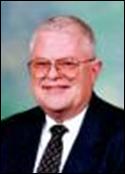 Gary
E. Strong is University Librarian at UCLA in Los
Angeles California (2003-). He previously was Director
of the Queens Library in New York City (1994-2003),
State Librarian of California (1980-1994), and
Deputy State Librarian of the Washington State
Library (1976-1980). He is a graduate of the University
of Idaho (B.S. (Ed.) and the University of Michigan
(AMLS, 1967). At the Queens Library he initiated
the Center for International Public Librarianship
and created WorldLinQ TM which includes an Arabic
language site. A long-time advocate for multi-lingual,
multi-cultural library services, he initiated the
Partnerships for Change Program and California
Literacy Campaign while State Librarian of California.
The California Research Bureau which develops public
policy research for California State Government
was established under his leadership at the California
State Library. He serves as a member of the Governing
Board of the International Federation of Library
Associations and Institutions (IFLA) and formerly
as IFLA’s
representative to the United Nations. The UCLA
Library is one of the top five ARL member libraries
with its collection of over 8 million volumes and
80,000 serials, including comprehensive collections
from the Middle East. Gary
E. Strong is University Librarian at UCLA in Los
Angeles California (2003-). He previously was Director
of the Queens Library in New York City (1994-2003),
State Librarian of California (1980-1994), and
Deputy State Librarian of the Washington State
Library (1976-1980). He is a graduate of the University
of Idaho (B.S. (Ed.) and the University of Michigan
(AMLS, 1967). At the Queens Library he initiated
the Center for International Public Librarianship
and created WorldLinQ TM which includes an Arabic
language site. A long-time advocate for multi-lingual,
multi-cultural library services, he initiated the
Partnerships for Change Program and California
Literacy Campaign while State Librarian of California.
The California Research Bureau which develops public
policy research for California State Government
was established under his leadership at the California
State Library. He serves as a member of the Governing
Board of the International Federation of Library
Associations and Institutions (IFLA) and formerly
as IFLA’s
representative to the United Nations. The UCLA
Library is one of the top five ARL member libraries
with its collection of over 8 million volumes and
80,000 serials, including comprehensive collections
from the Middle East. |
Dr. John Van Oudenaren
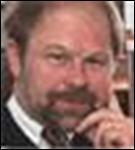 Dr.
John Van Oudenaren was appointed senior advisor for
the World Digital Library initiative of the Library
of Congress in December 2005. Previously he served
as chief of the European Division at the Library
and the director of the Library’s Global Gateway
digital library projects. Dr.
John Van Oudenaren was appointed senior advisor for
the World Digital Library initiative of the Library
of Congress in December 2005. Previously he served
as chief of the European Division at the Library
and the director of the Library’s Global Gateway
digital library projects.
Prior to joining the Library in 1996, he was a senior researcher at the
RAND Corporation and director of RAND's European office in Delft, the Netherlands.
He has served on the Policy Planning Staff of the U. S. Department of State
and has been a research associate at the International Institute for Strategic
Studies in London. He received his Ph. D. in Political Science from the
Massachusetts Institute of Technology and his A. B. in Germanic Languages
and Literature from Princeton University. Dr. Van Oudenaren has published
several books and numerous articles on European politics and international
relations. He is an adjunct professor at the BMW Center for German and
European Studies, School of Foreign Service, Georgetown University. |
Dr. Sohair F. Wastawy
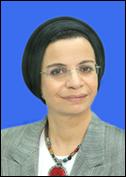 Dr.
Wastawy received her BA, MA, and completed work towards
her Ph.D. thesis in Linguistics at Cairo University,
Egypt. She possesses a Master’s degree
in Library and Information Science from the Catholic
University of America, Washington DC, USA and a Doctorate
degree in Library and Information Management from
Simmons College, Massachusetts,
USA. Dr.
Wastawy received her BA, MA, and completed work towards
her Ph.D. thesis in Linguistics at Cairo University,
Egypt. She possesses a Master’s degree
in Library and Information Science from the Catholic
University of America, Washington DC, USA and a Doctorate
degree in Library and Information Management from
Simmons College, Massachusetts,
USA.
Dr. Wastawy has been a practitioner in the information
field since 1975 and practiced librarianship in a
number of countries that include Egypt, Saudi Arabia,
and the USA. She began her library career at Cairo
University Library, taught librarianship in the first
women’s library program
in Saudi Arabia and was the Dean of Libraries at Illinois Institute of
Technology at Chicago from 1988 until 2004.
Dr. Wastawy was recently appointed as the first Chief Librarian for the
new Library of Alexandria, Alexandria, Egypt. In addition to her leadership
role and managerial responsibilities, Dr. Wastawy is often a consultant
to non-profit organizations, corporations, and accreditation commissions.
Dr. Wastawy is an expert in library management in academic and research
institutions. Her most recent publication “Learning Communities:
An investigative Study into their Impact on Library Services” was
published in Science and Technology Libraries, Vol. 24, No. 3/4,
2004. Dr. Wastawy has been the recipient of many excellence awards, a Peace
Fellowship and a Fulbright Scholarship. |
Dr. Donald J. Waters
Dr. Donald J. Waters is the Program Officer for Scholarly Communications
at The Andrew W. Mellon Foundation. Before joining the Foundation, he served
as the first Director of the Digital Library Federation (1997-1999), as
Associate University Librarian at Yale University (1993-1997), and in a
variety of other positions at the Computer Center, the School of Management,
and the University Library at Yale. Waters graduated with a Bachelor's
degree in American Studies from the University of Maryland, College Park
in 1973. In 1982, he received his Ph.D. in Anthropology from Yale University.
Waters conducted his dissertation research on the political economy of
artisanry in Guyana, South America. He has edited a collection of African-American
folklore from the Hampton Institute in a volume entitled Strange Ways and
Sweet Dreams. In 1995-96, he co-chaired the Task Force of the Commission
on Preservation and Access and the Research Libraries Group on Archiving
of Digital Information, and was the editor and a principal author of the
Task Force Report. He is a fellow of the American Association for the Advancement
of Science and is the author of numerous articles and presentations on
libraries, digital libraries, digital preservation, and scholarly communications. |
|
|

